

Lens Performance Guide
Find the best lens coating for your typical day in 30 seconds.
Choosing glasses today isn’t just about picking a frame that looks good. Modern lenses come with different surface treatments and coatings that can dramatically change how your glasses feel, look, and perform throughout the day.
The problem? Most people don’t actually know which lens coating they need.
They hear words like anti-glare, premium coating, or all-weather lenses but no one explains what those terms mean in real life, or how they connect to everyday activities like working on a laptop, walking outdoors, or driving at night.
That’s exactly why we built this Lens Selection Guide Tool.
This page walks you through:
- What each input in the tool actually represents
- How the tool evaluates your daily usage
- What each result means in practical, real-world terms
- How to use this guidance when choosing your next pair of glasses
This is not a prescription tool. It doesn’t measure eyesight or diagnose anything. Instead, it helps you understand how lens coatings behave in different environments, so you can make a more confident choice.
Why Lens Coatings Matter More Than Most People Think
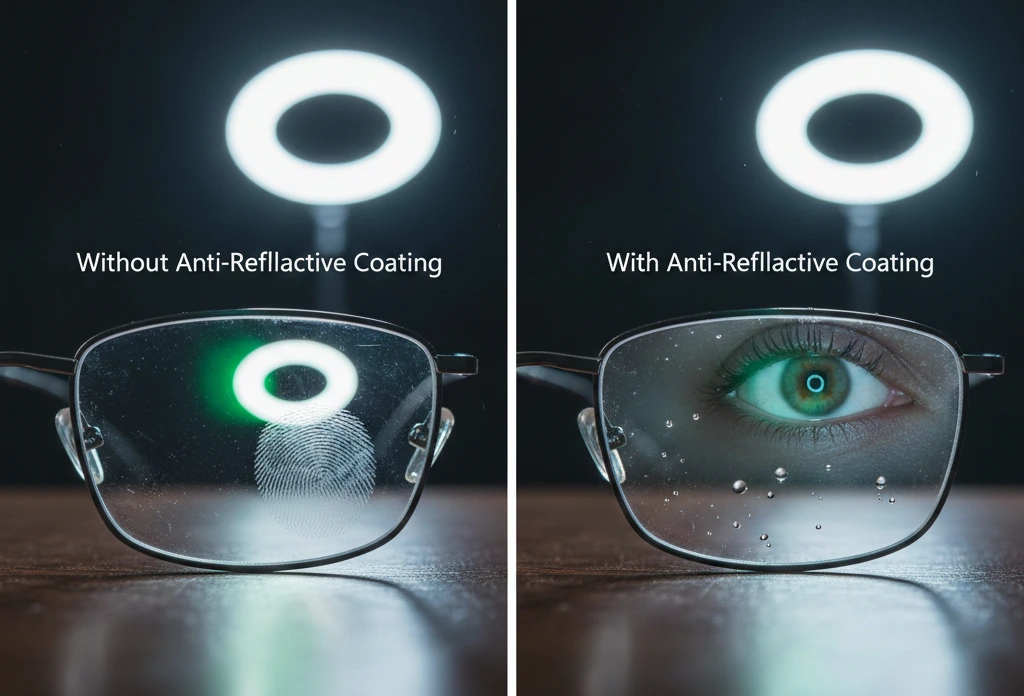
If you’ve ever tried on two pairs of glasses with the same prescription but felt that one pair was “easier” to wear, you’ve already experienced the impact of lens coatings.
Lens coatings affect:
- How much light reflects off the lens surface
- How clearly others can see your eyes
- How distracting overhead lights feel
- How quickly lenses get dirty or smudged
- How comfortable glasses feel during long wear
Two lenses can look identical at first glance but behave very differently over an 8–10 hour day.
This tool focuses on performance, not numbers. Instead of asking technical questions, it asks about how you actually use your glasses.
How This Lens Performance Guide Works
The Lens Performance Guide analyzes four simple areas of your daily routine:
- Your environment
- Your main visual focus
- How often you wear glasses
- What bothers you most about lenses
Each answer contributes to an overall profile of how your lenses are used in the real world. Once all four are selected, the tool suggests a lens coating category that best matches those conditions.
Let’s break down each input in detail.
Input 1: Where Do You Spend Most of Your Day?
This question sets the foundation for how light interacts with your lenses.
Mostly Indoors (Home / Soft Light)
This option fits people who:
- Spend most of their time at home
- Work in softly lit environments
- Read, write, or do close-range tasks
- Rarely deal with harsh lighting
In these environments, lenses are not constantly challenged by strong reflections or intense brightness. Simpler coatings often perform extremely well here.
Mixed Environment (Office / Store / Classroom)
This is the most common choice.
It applies if you:
- Move between rooms with different lighting
- Work under LED or fluorescent lights
- Use screens during the day
- Spend time both indoors and outdoors
Mixed environments introduce reflections from multiple angles. Lens coatings need to manage glare without changing how the world looks.
Mostly Outdoors (Bright Sun / Roads)
This option is for people who:
- Spend long hours outside
- Drive frequently
- Work near roads or open spaces
- Are exposed to strong sunlight
Bright environments place higher demands on lens surfaces. Without proper coatings, reflections can feel harsh or distracting.
Input 2: What Is Your Primary Focus Area?
This question helps the tool understand how you visually interact with the world.
Paper / Reading / Physical Tasks
Choose this if:
- You read books or documents
- Do hands-on work
- Focus on nearby objects
- Use minimal screens
In these situations, clarity and transparency matter more than glare control.
Digital Screens (Laptop / Phone)
This option fits people who:
- Work on computers
- Use phones frequently
- Switch between devices
- Spend hours looking at illuminated screens
Screens introduce artificial light sources directly into your visual field. Lens coatings play a big role in how comfortable this feels over time.
Distance (Driving / Navigation)
This applies if:
- You drive regularly
- Look far ahead often
- Need clear distance vision
- Use glasses for navigation or travel
Distance viewing is where reflections from headlights, road lights, and sun glare become most noticeable.
Input 3: How Often Do You Use Your Glasses?
Frequency matters because small annoyances become big problems over time.
Occasionally (Only for Tasks)
If you wear glasses only when needed:
- Comfort issues are less noticeable
- Lightweight coatings often work well
- Simplicity is an advantage
Regularly (Half the Day)
This is common for work or study use. Lenses need to balance clarity and durability.
Constantly (All Day Use)
All-day wear magnifies everything:
- Smudges become frustrating
- Reflections feel more intrusive
- Coating quality becomes critical
This input helps the tool weigh how “forgiving” the lens needs to be.
Input 4: What Bothers Your Eyes Most?
This is the most practical question in the tool — and often the one people relate to immediately.
Dust / Smudges on the Lens
If you’re constantly cleaning your glasses, coatings that resist fingerprints and dust make a noticeable difference.
Reflection / Glare from Lights
This is common in offices, shops, and nighttime environments. Glare doesn’t hurt your eyes — but it can be distracting and tiring.
Intense Brightness / White-Out
This happens in strong sunlight, on roads, or in very bright spaces. Lens surfaces need help managing reflected light.
Understanding Your Results
Once all four inputs are selected, the tool groups your answers into one of three lens performance categories. These are not brand names they’re functional descriptions designed to be easy to understand.
Result 1: Crystal Clear Standard
What This Means
This result appears when your lifestyle:
- Is mostly indoors
- Involves limited glare
- Uses glasses occasionally or for specific tasks
How These Lenses Behave
- Maximum transparency
- Minimal visual distortion
- Clean, natural look
- Your eyes remain fully visible
These lenses feel “invisible” because there’s very little surface interference.
Who This Is Best For
- Readers
- Home users
- Minimal screen users
- People who value simplicity
Result 2: Anti-Glare Professional
What This Means
This result appears when your routine includes:
- Office lighting
- Screens
- Mixed environments
- Regular daily use
How These Lenses Behave
- Reflections are reduced from overhead lights
- Screens look cleaner
- Your lenses appear clearer to others
- Less visual distraction during long tasks
This is often the sweet spot for modern work life.
Who This Is Best For
- Office professionals
- Students
- Remote workers
- People on video calls
Struggling With LED Headlights at Night? Read our guide on Anti-Glare For LED Headlights
Result 3: All-Weather Performance Suite
What This Means
This result appears when your lifestyle involves:
- Bright outdoor conditions
- Driving or travel
- High light contrast environments
- All-day wear
How These Lenses Behave
- Strong surface reflection control
- Better performance in changing light
- Reduced glare from roads and open spaces
- Durable coatings that stay cleaner longer
These lenses are designed for demanding environments.
Who This Is Best For
- Drivers
- Outdoor workers
- Travelers
- People exposed to bright conditions
How to Use This Tool When Buying Glasses
This guide doesn’t replace an optician it prepares you to ask better questions.
When choosing lenses:
- Match your result to the lens coating options available
- Focus on performance descriptions, not marketing buzzwords
- Remember that coatings affect comfort, not vision correction
You can use this tool:
- Before buying glasses online
- When comparing lens upgrade options
- To understand why past glasses felt uncomfortable
Why This Tool Avoids Medical Claims
You may notice what this tool doesn’t do:
- It doesn’t ask for prescription values
- It doesn’t assess eye health
- It doesn’t promise relief or treatment
That’s intentional.
Lens coatings are about visual experience, not medical outcomes. This approach keeps the guide accurate, trustworthy, and safe while still being genuinely useful.
Frequently Asked Questions
Is this tool accurate for everyone?
It provides general guidance based on usage patterns. Individual preferences and environments may vary.
Does this replace professional advice?
No. It helps you understand options before speaking to an optician.
Can two people get different results with the same glasses?
Yes. Lifestyle and environment matter as much as the lenses themselves.
Why doesn’t it ask for prescription strength?
Because coating performance depends more on usage than lens power.
Final Thoughts
Most lens decisions fail because people are asked technical questions they don’t understand.
This Lens Performance Guide flips that process around. Instead of numbers and jargon, it starts with your day, your environment, and what actually annoys you.
That’s how lens selection should work.
Use this tool as a starting point a way to understand how lenses behave in real life — and you’ll never feel confused by coating options again.