
How to Find Your Perfect Glasses: 2026 Face Shape Guide
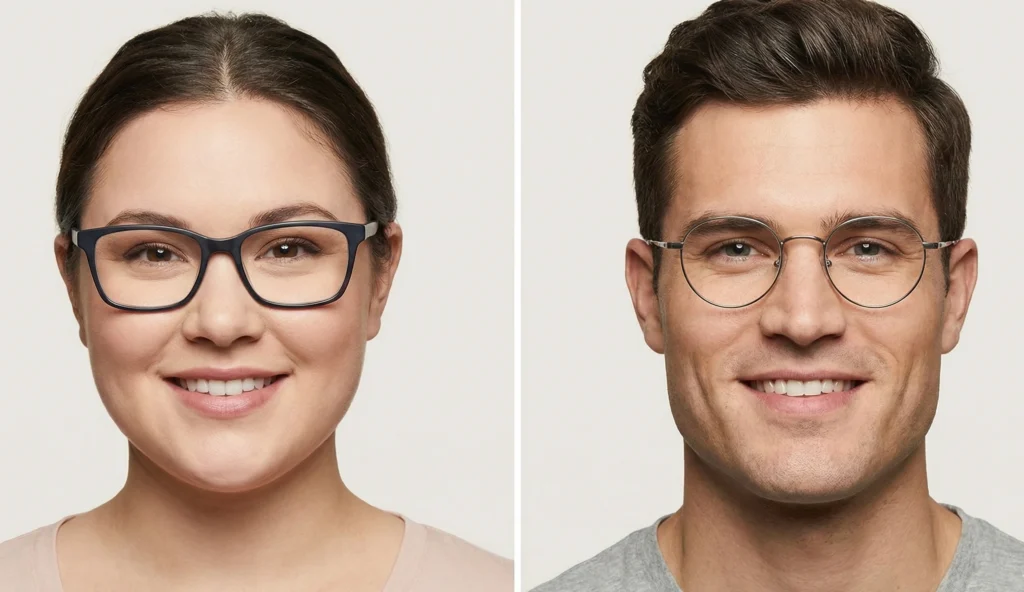
If you’ve ever tried on a pair of glasses that looked great on the shelf but somehow wrong on your face you already know the problem.
Choosing glasses isn’t just about style. It’s about proportion.
I learned this the frustrating way. I once bought a frame purely because it looked “clean” and minimal. In the mirror, it seemed fine. A week later, every photo of me looked off. My face felt heavier. My features looked unbalanced. Nothing was technically wrong, but nothing felt right either.
That’s when I stopped guessing. I realized that to find your perfect glasses, you have to ignore the trends and start paying attention to face shape logic.
This guide isn’t about rules that box you in or trends that expire in six months. It’s about understanding why certain frames work on certain faces, and how to find your perfect glasses that feel natural the moment you put them on.
By the end, you’ll be able to look at a frame and know exactly how to find your perfect glasses before you even try them on.
Table of Contents
Why Face Shape Matters More Than You Think
Most people think face shape is a styling trick. It’s not.
Face shape affects:
- How wide frames appear on you
- How heavy or light your face looks
- Whether glasses emphasize or soften features
- How balanced your proportions feel in photos
When glasses clash with your face shape, you subconsciously feel it. You adjust them more. You second-guess your choice. You stop wearing them as often.
When glasses match your face shape, the opposite happens:
You forget about them. They just fit visually and physically.
First: Stop Overthinking Face Shape Categories
Here’s the truth most guides won’t tell you:
Almost no one has a “perfect” face shape.
You’re not 100% round. Not perfectly square. Not a textbook oval. Most people are a blend.
That’s why rigid rules fail.
Instead of obsessing over labels, focus on three visual factors:
- Width vs length
- Jaw strength
- Forehead dominance
Once you understand those, frame selection becomes logical instead of confusing.
How to Find Your Perfect Glasses for Your Face Shape (The Practical Way)
Forget measuring apps and drawing outlines.
Stand in front of a mirror and answer these honestly:
- Is my face longer than it is wide?
- Is my jaw soft or angular?
- Is my forehead wider than my jaw?
Your answers place you into a dominant shape category, even if you borrow traits from others.
Let’s break them down.
Round Face: Soft Curves, Equal Width and Length
What People Get Wrong
Most people with round faces think they need to “hide” their face. They don’t.
The goal isn’t to slim it’s to add structure.
What Works Best
- Rectangular frames
- Square frames
- Frames with sharp edges
- Thinner rims
These frames introduce contrast. They break the softness and give definition.
What Usually Doesn’t Work
- Small round frames
- Circular lenses
- Soft curves that mimic face shape
They exaggerate roundness instead of balancing it.
GlaSight Tip
If a frame makes your cheeks look fuller from the front, skip it. That effect only gets stronger in photos.
Square Face: Strong Jaw, Equal Width Across the Face
What People Get Wrong
quare faces often lean into sharp frames thinking ‘strong matches strong.’ But if you want to find your perfect glasses, that strategy usually backfires.
That usually backfires.
The Real Goal
You don’t need more angles. You need softening.
What Works Best
- Round frames
- Oval frames
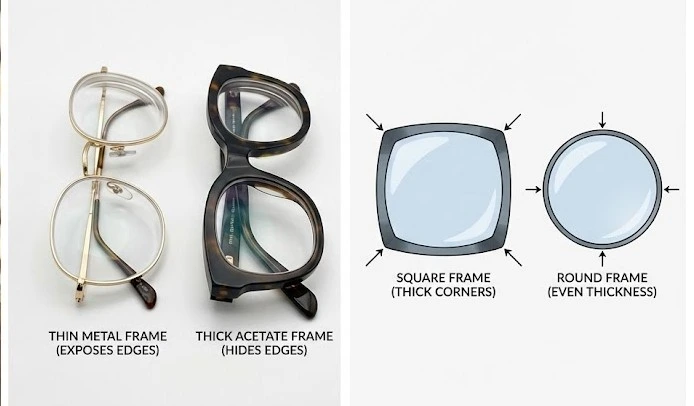
- Thin metal frames
- Curved bridges
These counterbalance the jawline and create flow.
What to Be Careful With
- Thick square acetate
- Heavy straight bridges
- Frames that align exactly with jaw width
They make the face feel boxy and harsh.
GlaSight Tip
If your jawline looks even stronger with glasses on, the frame is reinforcing instead of balancing.
Oval Face: Balanced Proportions (The Flexible One)
Why Oval Faces Have It Easier
Oval faces naturally balance width and length, which makes it much easier to find your perfect glasses compared to other shapes.
But “most” doesn’t mean “all.”
What Works Best
- Rectangular frames
- Square frames
- Geometric styles
- Medium-to-large frame sizes
These add structure without overwhelming proportions.
What to Avoid
- Frames that are too small
- Narrow lenses that shorten the face visually
2026 Style Matrix: Best Frames for Oval Faces
| Frame Style | Visual Effect | 2026 Trend Rating |
|---|---|---|
| Geometric / Hexagon | Adds sharp definition to soft features | ⭐⭐⭐⭐⭐ (High) |
| Wide Rectangular | Broadens the face for a more athletic look | ⭐⭐⭐⭐ (Classic) |
| Soft Cat-Eye | Provides an upward “lift” to the cheekbones | ⭐⭐⭐⭐⭐ (Viral) |
GlaSight Tip
If a frame feels boring on an oval face, it’s usually too safe. This is where you can experiment.
Heart-Shaped Face: Wide Forehead, Narrow Jaw
What People Get Wrong
Most heart-shaped faces choose frames that are top-heavy.
That exaggerates the imbalance.
The Goal
Bring visual weight downward.
What Works Best
- Round frames
- Oval frames
- Light-colored frames
- Thin metal styles
These soften the forehead and balance the jaw.
What to Avoid
- Thick browlines
- Heavy top frames
- Bold upper rims
GlaSight Tip
If the frame draws attention to your forehead before your eyes, it’s the wrong direction.
Diamond Face: Narrow Forehead and Jaw, Wide Cheekbones
Why This Shape Is Tricky
Cheekbones dominate. Frames need to work with them, not compete.
What Works Best
- Oval frames
- Rimless or semi-rimless
- Light acetate
- Frames with gentle curves
What to Avoid
- Narrow frames
- Sharp geometric styles
- Heavy temples
GlaSight Tip
If your cheekbones look wider with glasses on, the frame is fighting your structure.
Long / Rectangular Face: Length Over Width
The Common Mistake
Choosing narrow frames.
That makes the face look longer.
The Goal
Add horizontal balance.
What Works Best
- Taller lenses
- Larger frames
- Deep acetate styles
- Frames with strong vertical height
What to Avoid
- Thin metal frames
- Narrow rectangles
GlaSight Tip
If your glasses make your face look stretched, the lens height is too short.
📊 Ready to Check Your Proportions?
Don’t guess your face shape. Our visual tool analyzes your jawline, forehead, and cheekbones to find your ideal frame symmetry.
Launch the Face Shape Tool →The 2026 Shift: Why Fit Matters as Much as Shape
In 2026, relying on face shape alone isn’t enough to find your perfect glasses
Modern glasses fail or succeed based on fit mechanics:
- Frame width
- Bridge fit
- Temple length
- Weight balance
You can choose the “right” shape and still be uncomfortable if fit is wrong.
That’s why many people blame style when the real issue is engineering.
Frame Size: The Silent Dealbreaker
A great shape in the wrong size will always look wrong.
Key things to check:
- Frame should align with temples, not extend past them
- Pupils should sit near the center of lenses
- Frame shouldn’t rest on cheeks
If any of those are off, shape won’t save it.
Are Your Glasses Too Tight or Sliding Down?
Don’t guess your size. Use our Frame Fit Guide Tool to find your ideal width and bridge measurements based on your facial behavior.
Launch the Fit Guide →Material Choice Changes Everything
Two frames with the same shape can feel completely different.
Lightweight materials:
- Feel better over long hours
- Sit more naturally
- Reduce visual bulk
Heavier frames:
- Pull forward
- Emphasize facial weight
- Feel distracting by evening
This matters more than most people realize.
If you have a strong prescription, heavy frames can be a disaster. Learn how to manage this in our guide on how to hide thick lenses.
Photos vs Real Life: Why Frames Can Look Different
Cameras flatten depth.
Frames that sit too far forward or are too wide often look fine in the mirror but exaggerated in photos.
That’s why balance matters as much as shape.
If a frame feels neutral on your face, it usually photographs better.
Stop Guessing: A Smarter Way to Choose
Instead of asking:
“Is this trendy?”
Ask:
“Does this balance my face?”
Instead of asking:
“Does this look cool?”
Ask:
“Does this disappear when I wear it?”
The best glasses don’t announce themselves. They support you.
While face shape determines the style, Frame Engineering determines the comfort. In 2026, the ‘perfect fit’ requires a balanced Vertex Distance (the space between your eye and the lens). If the frame is too wide for your face shape, the weight distribution shifts to the nose pads, leading to the crooked alignment we discussed in our Frame Adjustment Guide.
(Read This If You Skipped)
- Face shape is about balance, not rules
- Contrast creates harmony
- Fit matters as much as style
- Lightweight, well-balanced frames feel better and look better
- If you’re constantly adjusting your glasses, something’s off
Frequently Asked Questions (FAQs)
How do I know my face shape without measuring?
Look at width, jaw strength, and length. You’re likely a blend focus on dominant traits.
Can I wear frames not “recommended” for my face shape?
Yes, if they balance your features. Rules are guidelines, not laws.
Does face shape matter for comfort?
Indirectly. Wrong shapes often pair with poor fit, which affects comfort.
Are oversized frames bad?
Only if they overpower your proportions or slip constantly.
Do face shapes change over time?
Yes. Weight changes, aging, and hairstyle all affect proportions.
Final Thought
The best glasses don’t make you feel styled.
They make you feel right.
Once you understand face shape logic, the stress disappears. You stop guessing, and you finally find your perfect glasses with confidence. You stop returning frames. You start choosing with confidence.
And that’s when eyewear stops being an accessory and becomes something you actually enjoy wearing.