
3 Best Smart Glasses That Look Like Regular Glasses Frames
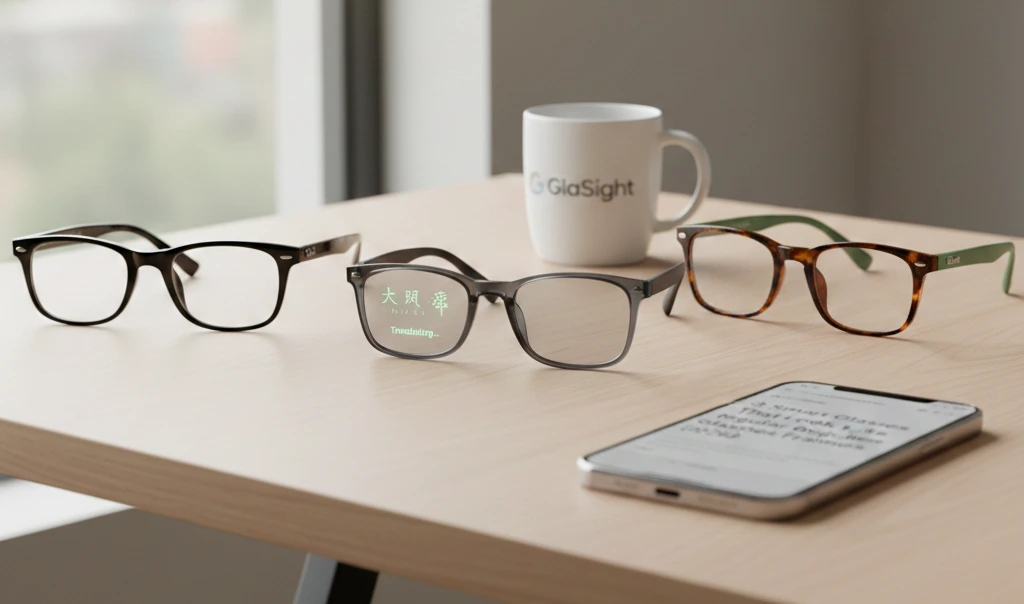
Smart Glasses That Look Like Regular for People Who Hate Tech (2026 Winner List)
For nearly a decade, smart glasses have promised a future where information floats effortlessly in front of your eyes. And for nearly the same amount of time, they’ve failed spectacularly.
They were bulky.
They looked awkward.
They screamed “tech experiment” instead of “something you’d actually wear outside.”
If you’ve ever tried smart glasses and thought, “I hate how these look and feel,” you’re not alone. Most people didn’t reject smart glasses because of technology they rejected them because they didn’t want to look or feel ridiculous wearing them.
But something changed heading into 2026.
A new generation of smart glasses quietly fixed the biggest problem: they stopped trying to look smart.
This article isn’t about specs for engineers or futuristic hype. It’s written for people who:
- Love good eyewear
- Care about comfort and aesthetics
- Hate gimmicks
- Want technology to disappear into the design
If you’ve avoided smart glasses until now, these are the three smart glasses that look like regular glasses frames.
Why Smart Glasses Failed for So Long
Before we talk about what works in 2026, it’s important to understand why smart glasses struggled for years.
1. They Tried to Do Too Much
Early smart glasses tried to replace your phone, your camera, your headset, and sometimes even your laptop. The result was hardware overload batteries, sensors, cameras, and processors crammed into something that sits on your nose.
No pair of glasses survives that gracefully.
2. They Looked Like Gadgets, Not Eyewear
Eyewear is deeply personal. People choose frames based on face shape, style identity, and how they feel wearing them. Early smart glasses ignored this completely.
They looked like prototypes.
Or worse like surveillance devices.
3. Comfort Was an Afterthought
Weight distribution, nose pressure, temple balance these things matter more for glasses than almost any other wearable. Many smart glasses were simply uncomfortable after 20–30 minutes.
If glasses aren’t comfortable, they don’t get worn. Period.
If you’re planning to put custom lenses into a smart frame, you need to be strategic about the weight. To help manage the bulk, check out our guide on How To Hide Thick Lenses: 7 Frame Selection Tips to ensure your setup stays lightweight and stylish.
After all, if glasses aren’t comfortable, they don’t get worn. Period.
What Changed in 2026?
The smart glasses that work today follow a very different philosophy:
- Eyewear first, technology second
- Fewer features, executed well
- Minimal visual footprint
- Comfort over novelty
Instead of asking “What can we add?”, designers finally asked “What can we remove?”
That shift is why the following three frames stand out.
The 2026 Target: Smart Glasses That Don’t Feel Smart
To qualify for this list, a pair of smart glasses had to meet all of these conditions:
- You’d wear them even if the tech was turned off
- They don’t attract attention in public
- They feel balanced after long use
- Their tech solves a real, everyday problem
Only three frames truly passed that test.
1. Even Realities G2 The “Stealth” Choice
Best for: People who want smart features without anyone knowing they’re wearing smart glasses
If you hate smart glasses because they announce themselves, the Even Realities G2 is the quiet rebellion you’ve been waiting for.
At just 36 grams, these glasses weigh about the same as many premium acetate frames. That alone changes the experience completely. You stop thinking about the technology and start thinking about the frame.
Why It Feels Different
The G2 has no outward-facing camera. No blinking lights. No obvious hardware cues. From the outside, it looks like a well-made pair of minimalist eyewear.
The display is a monochromatic green heads-up projection that appears only when needed. It doesn’t dominate your vision. It doesn’t flash notifications constantly. It feels more like a subtle prompt than a screen.
What It’s Actually Good At
Instead of doing everything, the G2 focuses on a few things and does them well:
- Turn-by-turn navigation
- Real-time translation
- Lightweight reminders
There’s no pressure to record content or interact socially. That alone makes it feel calmer than most smart glasses.
Why People Who Hate Smart Glasses Like It
Because it doesn’t change how you behave.
You’re not holding your head differently.
You’re not tapping frames constantly.
You’re not worried about privacy optics.
It feels like wearing normal glasses with an optional layer of assistance.
2. Ray-Ban Meta Gen 2 The “Iconic” Choice
Best for: People who want smart features but refuse to compromise on recognizable style
Ray-Ban didn’t win because they built the most advanced technology. They won because they understood something most tech companies missed:
People already trust the Wayfarer shape.
Familiar Design = Lower Friction
When someone sees you wearing Ray-Ban Meta Gen 2 glasses, they don’t think “smart glasses.” They think “Ray-Bans.”
That’s a huge psychological advantage.
You’re not introducing a new aesthetic into your wardrobe. You’re upgrading something you already wear.
What Makes Gen 2 Better Than Gen 1
The second generation quietly fixed many early complaints:
- Better balance across the temples
- Cleaner hinge integration
- Improved audio directionality
- Higher quality 3K video
But more importantly, it refined how the glasses are used.
You don’t need to constantly interact with them. You wear them like normal sunglasses or optical frames and occasionally, they do something useful.
Why This One Works for Social Users
If you enjoy capturing moments without pulling out your phone, these glasses feel natural. The camera isn’t the main attraction it’s just there when you need it.
They don’t force you into a tech-first mindset. They let you stay present.
3. XGIMI Memomind The “AI-First” Choice
Best for: Knowledge workers, creatives, and people who live in ideas not content capture
The XGIMI Memomind is the most conceptually interesting pair on this list. It’s not trying to be invisible. It’s trying to be useful in a very specific way.
What Makes It Different
Instead of focusing on photography or social sharing, Memomind focuses on information flow.
Its dual-eye display is designed for:
- Reminders
- Live notes
- Subtle prompts
- Contextual cues
This isn’t about recording the world. It’s about interacting with your thoughts.
Customization Matters Here
With 8 frame options and 5 temple designs, Memomind acknowledges something critical: people want choice. The ability to change the frame style dramatically improves adoption.
You’re not stuck with a single “tech look.”
Why It Appeals to Smart Glasses Skeptics
Because it doesn’t pretend to be cool.
It’s honest about what it is: a tool for thinking, organizing, and remembering. And when technology is honest, it tends to feel less intrusive.
Comparing the Three (Without the Hype)
| Feature Focus | Best Choice |
|---|---|
| Invisible daily wear | Even Realities G2 |
| Style & familiarity | Ray-Ban Meta Gen 2 |
| Cognitive assistance | XGIMI Memomind |
None of these are perfect. But all three finally respect the idea that glasses are worn on the face, not in a lab.
Who Smart Glasses Are Finally For in 2026
Smart glasses aren’t for everyone and that’s okay.
But they are finally wearable for people who:
- Already wear glasses daily
- Value subtle design
- Want less screen time, not more
- Prefer quiet utility over flashy features
They’re no longer novelty gadgets. They’re becoming accessories with a purpose.
The Real Test: Would You Wear Them With the Tech Turned Off?
This is the question that separates good smart glasses from bad ones.
Would you still wear the frame if the battery died?
For the three glasses above, the answer is surprisingly often: yes.
And that’s why smart glasses in 2026 finally feel… wearable.
Final Thought: Smart Glasses Didn’t Win Eyewear Did
The breakthrough wasn’t better processors or brighter displays.
The breakthrough was humility.
Designers stopped forcing technology into glasses and started shaping technology around eyewear. And when that happened, smart glasses stopped feeling like a compromise.
If you’ve hated smart glasses until now, you weren’t wrong.
But 2026 might be the year you finally stop noticing the tech and just enjoy the glasses.
Before upgrading to smart frames, make sure your current fit is perfect. Try our Free Frame Fit Finder Tool
Frequently Asked Questions (FAQs)
Do smart glasses look noticeable in public?
Many newer smart glasses are designed to look almost identical to traditional frames. Models like “stealth” or minimalist designs avoid visible cameras or flashing indicators, allowing users to wear them without drawing attention.
Are smart glasses practical for everyday use?
Yes, when designed properly. The latest smart glasses focus on specific everyday tasks like navigation, reminders, note prompts, or casual content capture instead of trying to replace your phone entirely.
Do smart glasses look noticeable in public?
Many newer smart glasses are designed to look almost identical to traditional frames. Models like “stealth” or minimalist designs avoid visible cameras or flashing indicators, allowing users to wear them without drawing attention.
Can smart glasses replace a smartphone?
Smart glasses are not meant to replace smartphones. Instead, they act as lightweight companions that reduce the need to constantly check your phone by delivering key information subtly and selectively.
Do smart glasses work without recording or cameras?
Yes. Some smart glasses intentionally remove cameras and focus only on heads-up displays, translation, navigation, or text-based prompts. These options appeal to users who value privacy and minimalism.
What are the best smart glasses for people who hate bulky tech?
The best options are lightweight frames with minimal external hardware, no exaggerated shapes, and subtle displays. Glasses that prioritize comfort and traditional styling tend to be preferred by tech-skeptical users.
Do smart glasses distract users?
The latest designs aim to reduce distraction by limiting notifications and using minimal displays. Unlike constant phone checking, smart glasses deliver brief, glanceable information.
Are smart glasses worth buying in 2026?
For users who value discreet design, hands-free information, and reduced screen interaction, smart glasses in 2026 offer meaningful improvements over past generations. Whether they’re “worth it” depends on lifestyle and expectations.
Do smart glasses work with prescription lenses?
Many modern smart glasses are designed to support prescription lenses or custom optical inserts. This makes them practical for daily wear rather than occasional gadget use.
How long do smart glasses batteries last?
Battery life varies by usage, but most 2026 smart glasses are designed to last a full day with moderate use. Standby efficiency has improved significantly compared to early models.