
Struggling With LED Headlights at Night? Skip Yellow Glasses
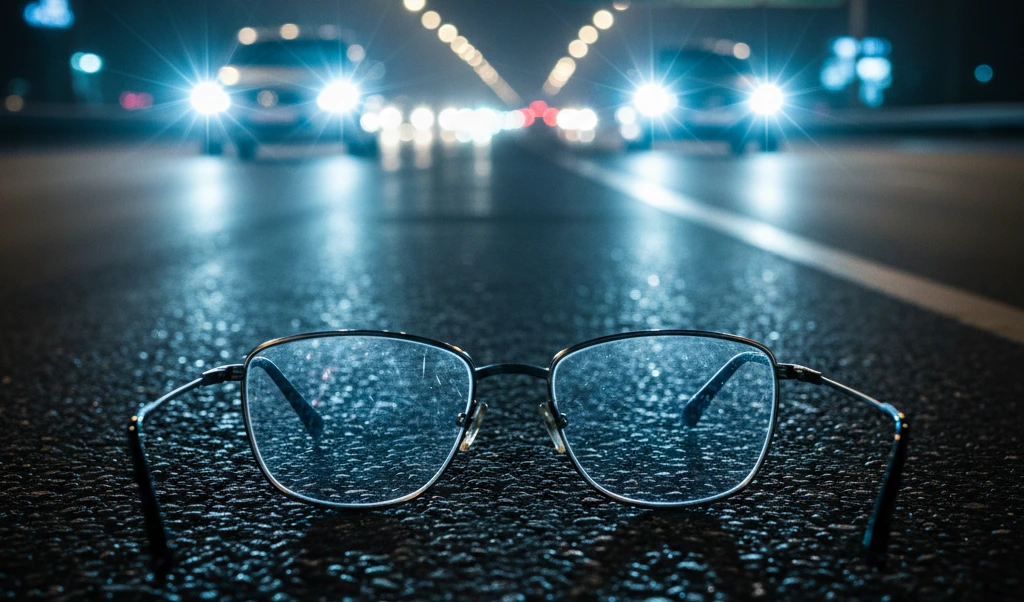
If you drive at night even occasionally, you already know the moment.
You’re cruising along, road seems clear, and then a wall of white light hits your eyes.
Not high beams.
Not fog.
Just modern LED headlights doing what they do best: overpower everything in front of them.
You squint.
You blink.
You instinctively look away from the road for half a second and that half second feels dangerous.
So you do what millions of drivers who struggling with led headlights at night do: search for a solution.
And almost every answer you find sounds the same:
“Get yellow night driving glasses.”
But here’s the uncomfortable truth most articles don’t explain:
Yellow tint is not the real fix.
In many cases, it actually makes night driving worse.
The real issue isn’t color.
It’s reflection.
And the solution most drivers actually need isn’t yellow lenses it’s Anti-Reflective (AR) coating, properly applied.
This article breaks down why modern headlights feel so blinding, why yellow tints are misunderstood, and what actually improves night driving clarity without hype, medical claims, or marketing tricks.
Table of Contents
The Real Problem Isn’t Brightness It’s Light Scatter
Most people describe night driving discomfort as “too bright.”
But brightness alone isn’t the enemy.
The real problem is how light behaves when it hits your glasses.
What actually happens at night
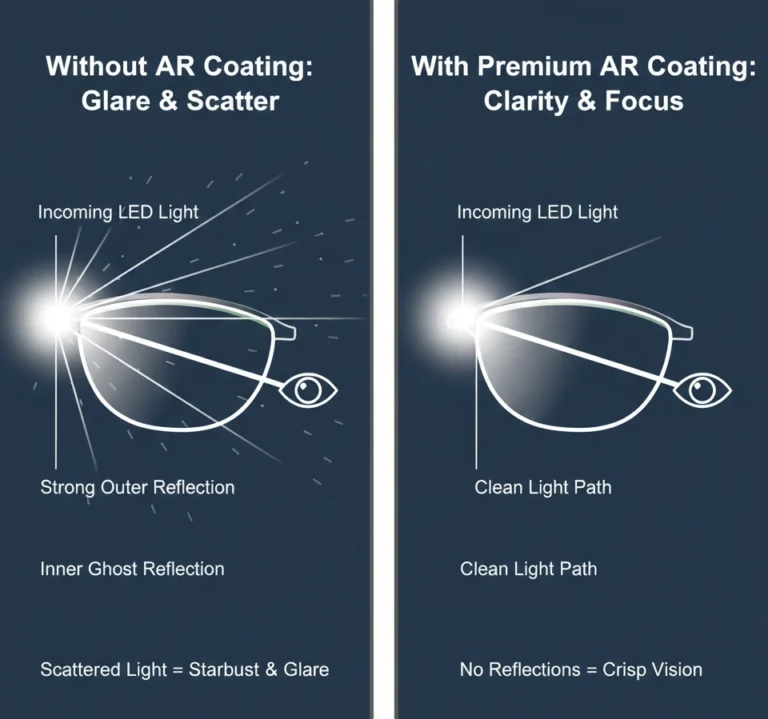
When an LED headlight hits a lens without proper AR coating:
- Light reflects off the front surface
- Light reflects off the back surface
- Some of it bounces back into your eye
- Some of it scatters sideways
Instead of one clean beam, your eye receives multiple ghost images.
That’s why you see:
- Starbursts
- Halos
- Glowing rings
- Washed-out road edges
This is not your imagination.
It’s physics.
And no amount of yellow tint fixes reflection.
Figure 1: How Anti-Reflective (AR) Coating eliminates internal lens reflections at night.
Why Modern LED Headlights Feel Worse Than Old Halogens
Older halogen headlights were:
- Warmer in color
- Lower in intensity
- Less focused
Modern LEDs are:
- Cooler (blue-white spectrum)
- Extremely focused
- Designed for visibility, not comfort
LEDs don’t just illuminate the road they retain intensity at distance.
Now add:
- Wet roads
- Reflective signs
- Windshields
- Glasses lenses
And suddenly every reflective surface becomes a mirror.
If you wear glasses without AR coating, you’re multiplying the problem.
The Yellow Tint Myth: Where It Came From
Yellow lenses didn’t start as a scam.
They were originally used for:
- Fog driving
- Snow glare
- Daytime contrast enhancement
Yellow filters reduce short-wavelength blue light, which can:
- Increase contrast
- Reduce haze in certain conditions
But here’s what most articles skip:
Yellow lenses reduce total light transmission
At night, that’s a problem.
Your eyes already struggle to gather light in low-light conditions.
Filtering light further can make:
- Dark roads darker
- Pedestrians harder to spot
- Peripheral vision weaker
Many drivers report:
“Headlights feel softer, but everything else feels dimmer.”
That’s not a win.
Why Yellow Lenses Feel Good for 5 Minutes (Then Annoying)
Yellow tints create a perceived comfort effect.
They:
- Warm the scene
- Reduce harsh white tones
- Make glare feel less aggressive
But they do nothing to stop:
- Reflections bouncing inside the lens
- Halos caused by internal glare
- Ghost images from uncoated surfaces
So what happens?
At first:
“This feels easier on my eyes.”
Later:
“Why does everything feel flat and dark?”
That’s because the core issue reflection is untouched.
GlaSight Engineering Insight: Yellow lenses typically have a light transmission rate of 75-85%. A clear lens with premium AR transmission is ~99.5%. By wearing yellow tints at night, you are effectively “turning down the volume” of the entire world just to soften a few headlights.
Why Anti-Reflective (AR) Coating is the Real Solution for LED Glare
AR coating isn’t about color.
It’s about eliminating surface reflection.
A properly applied AR coating:
- Cancels reflected light through interference
- Allows more light to pass through the lens
- Prevents ghost images from forming
This means:
- Headlights look defined, not smeared
- Street signs stay crisp
- Your eyes don’t fight competing light sources
The counter-intuitive truth
AR lenses actually let more light reach your eyes, not less.
That’s exactly what you want at night.
Why AR Matters More at Night Than During the Day
During daytime:
- Your pupils are small
- Ambient light overwhelms reflections
- Glare is annoying but manageable
At night:
- Pupils dilate
- Reflections become dominant
- Your visual system becomes sensitive to scatter
Without AR coating, night driving turns into a constant visual negotiation.
With AR coating:
- Light enters cleanly
- Your brain processes fewer artifacts
- Fatigue drops dramatically
Many drivers describe it as:
“The road feels calmer.”
The Hidden Problem: AR vs “Anti-Glare” Marketing
Not all AR coatings are equal.
Some cheap lenses claim:
- “Anti-glare”
- “Blue control”
- “Night safe”
But still reflect light heavily.
How to tell?
The reflection test (do this anywhere)
Hold your glasses under a light source.
- Bright white reflection → no AR
- Strong blue/purple shine → poor AR or cheap blue filter
- Faint green or subtle purple → quality AR
If your lenses look like mirrors at night they are.
Why AR + Clear Lenses Beat Yellow Every Time
Let’s compare honestly.
Yellow lenses:
- Reduce glare perception
- Reduce overall light
- Alter color accuracy
- Do not stop reflection
Clear lenses with premium AR:
- Preserve full light transmission
- Eliminate reflections
- Maintain natural colors
- Improve clarity, not just comfort
If your goal is safe, confident night driving, clarity matters more than warmth.
What About Blue Light When You Struggling with LED Headlights at Night?
This is where confusion increases.
Blue light is relevant for:
- Screens
- Indoor lighting
- Sleep cycles
Headlights are not screens.
Filtering blue light from headlights:
- Does not remove glare
- Does not stop scatter
- Can reduce contrast in low light
For night driving:
- AR coating matters
- Lens clarity matters
- Blue filtering is secondary at best
Choosing the right coating depends on your environment. For example, if your primary struggle is glare from oncoming traffic rather than computer screens, you should check our guide on Anti-Reflective vs. Blue Light Blocking.
Who Actually Benefits From Yellow Lenses?
Let’s be fair.
Yellow lenses can help:
- In fog or snow
- During daytime haze
- For sports contrast enhancement
They are not designed for night road safety.
If someone feels better wearing them at night, it’s usually because:
- Their original lenses had no AR
- Any change felt like an improvement
But compared side-by-side with proper AR lenses?
Yellow loses.
✨ Confused by Lens Coatings?
Don’t pay for coatings you don’t need. Use our interactive guide to find the perfect performance suite based on your daily screen time and environment.
Try the Lens Selection Tool →Common Night Driving Complaints (And What Actually Fixes Them)
“Headlights explode into starbursts”
→ AR coating
“Everything looks washed out”
→ Remove tint, keep AR
“My eyes feel tired after 30 minutes”
→ AR + proper frame fit
“Rain makes glare unbearable”
→ AR (water amplifies reflection)
“My glasses feel worse than no glasses”
→ Uncoated lenses are the culprit
Why Many Drivers Think Their Eyes Are the Problem
This is important.
People blame:
- Aging
- Weak eyesight
- Astigmatism
But often the issue is optical quality, not vision.
Two people with the same prescription:
- One with AR
- One without
Will have completely different night driving experiences.
That’s not subjective it’s optical physics.
The Frame Factor (Yes, It Matters)
Even with perfect lenses, frame design can sabotage night driving.
Look for:
- Thin rims (less edge reflection)
- Well-centered lenses
- Balanced weight (no tilt)
Poor frame alignment causes:
- Angle-based reflections
- Increased glare at the edges
Night driving glasses should disappear on your face not remind you they exist.
What to Ask for When Buying Night Driving Glasses
Forget buzzwords.
Ask these exact questions:
- Does this lens have premium AR on both sides?
- Is the AR optimized for low-light reflection control?
- Is the lens clear, not tinted?
- Will this reduce internal reflections, not just color temperature?
If a seller pushes yellow immediately walk away.
The Real Reason Yellow Glasses Are Pushed So Hard
They’re easy.
- Cheap to manufacture
- Easy to market
- Immediate “feels different” effect
AR coatings require:
- Better materials
- Proper application
- Higher quality control
But they actually work.
Final Verdict: What Actually Helps Night Driving
If LED headlights bother you:
- Skip yellow tints
- Choose clear lenses
- Insist on premium AR coating
- Make sure your frames are properly fitted
That combination reduces:
- Glare
- Halos
- Eye fatigue
- Visual stress
Not through gimmicks through optics done right.
Why AR Coating Wins for Night Driving (Read if you Skip Article)
- The Glare Myth: Yellow-tinted glasses are often marketed as a “fix,” but they actually reduce total light transmission, which can make dark roads even more dangerous.
- Physics of Reflection: Night driving “ghost images” and starbursts are caused by light bouncing off the front and back of your lenses.
- The AR Solution: A premium Anti-Reflective (AR) coating allows up to 99.5% of light to pass through the lens, eliminating the internal reflections that cause blinding glare.
- Visual Clarity vs. Comfort: While yellow tints might feel warmer, clear lenses with AR coating provide superior visual acuity and help you spot hazards like pedestrians or potholes faster.
- Durability Tip: Quality AR coatings today include hydrophobic layers that repel water and smudges, which is essential for maintaining clarity during rainy night drives
Bottom Line
Night driving isn’t getting worse because your eyes are failing.
It’s getting harder because:
- Headlights are brighter
- Roads are more reflective
- Glasses without AR amplify the problem
The solution isn’t coloring the world yellow.
It’s letting light pass cleanly once without bouncing around your lenses.
That’s what Anti-Reflective coating does.
And once you experience proper AR at night, it’s very hard to go back.
Frequently Asked Questions (FAQs)
Are yellow-tinted glasses safe for night driving?
While yellow tints can increase contrast in fog or haze, they are generally not recommended for pure night driving. They reduce the total amount of light entering your eyes, which can hide hazards like pedestrians or dark road edges. Clear lenses with a premium AR coating are the safer, science-backed alternative
How can I tell if my current glasses have Anti-Reflective (AR) coating?
Hold your glasses at an angle under a light. If you see a strong white reflection, they have no coating. If you see a faint green, blue, or purple tint in the reflection, you have a high-quality AR coating.
Do blue light glasses work for night driving glare?
Not effectively. Blue light filters are designed for digital screens, not the intense “scatter” of LED headlights. For driving, you need a coating specifically engineered to reduce high-intensity reflections, which is the primary function of AR.
Can I use polarized sunglasses for night driving?
Never. Polarized sunglasses are too dark for night use and can dangerously reduce your visibility to near zero in unlit areas.