
Why Kids Keep Breaking Glasses (And How TR90 Frames Fix It)
If you’re a parent, you already know this frustration too well.
You buy your child a new pair of glasses. They look perfect. The fit seems right. You’re careful with the case. You remind them every single day to take care of them.
And then
A week later, the glasses are bent.
A month later, one arm is loose.
Soon after that, they’re snapped in half.
At some point, you stop asking what happened and start asking something else entirely:
“Why does this keep happening?”
If you’re searching things like “kids keep breaking glasses”, “what to do when your child’s glasses keep breaking”, or “durable kids glasses”, you’re not alone. Thousands of parents are dealing with the same problem and most of them are getting the wrong advice.
This guide is different.
At A Glance
- It’s Not the Kid, It’s the Frame: Standard plastic glasses are too rigid for active play, leading to inevitable snapping.
- The “Hinge” Problem: Most breakage happens at the hinges because metal arms cannot withstand twisting or one-handed removal.
- The TR90 Solution: Switching to TR90 (Memory Polymer) frames allows glasses to bend 180 degrees and snap back to shape.
- Safety First: Flexible frames don’t just last longer; they prevent injury by absorbing impact rather than shattering.
We’re not going to blame your child.
We’re not going to tell you to “be more careful.”
And we’re not going to pretend kids suddenly become gentle just because they’re wearing glasses.
Instead, we’re going to explain why kids break glasses so often, what most parents misunderstand about frames, and why TR90 flexible frames have quietly become one of the most practical solutions for children who seem to break every pair they touch.
Table of Contents
The Hard Truth: Kids Aren’t Breaking Glasses on Purpose
One of the biggest misconceptions parents have is assuming broken glasses equal careless behavior.
In reality, kids break glasses because most glasses aren’t designed for kids’ lives.
Think about how children actually move through the world:
- They run without warning
- They fall forward, backward, sideways
- They sit on things without looking
- They toss backpacks onto the floor
- They forget glasses are on their face
None of this is bad behavior. It’s childhood.
Now compare that to how traditional eyeglasses are designed:
- Rigid materials
- Fixed hinges
- Frames that expect controlled movement
- Designs based on adult usage
That mismatch is the real problem.
Why Kids Keep Breaking Glasses (The Real Reasons)
Before we talk solutions, we need to understand the mechanics behind why glasses fail on kids.
1. Material Failure
Most standard frames are made from acetate or hard plastic. These materials look good, but they don’t flex well.
When pressure is applied:
- The frame doesn’t bend
- The stress concentrates in one spot
- The material cracks or snaps
Kids apply unpredictable pressure constantly. Rigid frames don’t forgive mistakes.
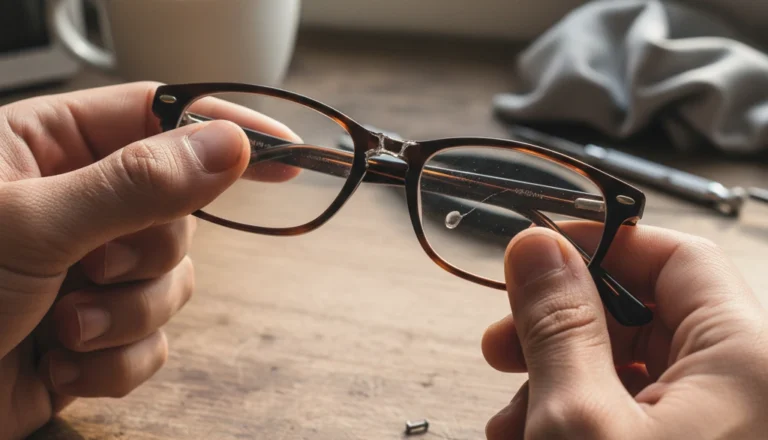
2. Hinges Are the Weakest Point
If you’ve noticed, many kids’ glasses don’t break in the middle they break at the arms.
That’s because:
- Hinges are metal
- They’re fixed at specific angles
- They aren’t designed for overextension
A child pulling glasses off with one hand, laying on their side, or bending the arms outward can easily damage hinges.
3. Frames Aren’t Built for Falls
Kids fall. A lot.
When glasses hit the ground:
- Hard frames absorb shock poorly
- Energy transfers into cracks
- Lenses pop out
- Arms twist beyond recovery
Durable kids glasses must absorb impact, not resist it.
4. Poor Fit Increases Breakage
Ill-fitting glasses break faster.
Why?
- Loose frames slide and fall
- Tight frames get overstressed
- Poor balance makes glasses front-heavy
Parents often focus on prescription accuracy but overlook frame ergonomics, which play a massive role in durability.
5. Kids Don’t “Feel” Fragility the Way Adults Do
Adults instinctively protect glasses because we understand their cost and fragility.
Kids don’t have that instinct yet.
They:
- Forget glasses are on
- Lean on them
- Toss them with clothes
- Sleep with them on
The solution isn’t teaching kids to behave like adults.
It’s giving them glasses designed for kids.
The Breaking Point: When Replacing Glasses Becomes Exhausting
Most parents reach a point where replacing glasses becomes more than inconvenient it becomes stressful.
You might recognize these thoughts:
- “We just bought these.”
- “They’re expensive.”
- “How did this even happen?”
- “Is this going to keep happening forever?”
This is usually when parents start searching for durable kids glasses or flexible frames, hoping there’s something better out there.
There is but it’s rarely explained clearly.
Introducing TR90: What It Is (Without the Technical Jargon)
TR90 isn’t a brand name.
It’s not a marketing gimmick.
And it’s not just “plastic with a fancy name.”
TR90 is a thermoplastic material known for being:
- Flexible
- Lightweight
- Impact-resistant
- Memory-retentive (it returns to shape)
In simple terms:
TR90 bends instead of breaking.
That single difference changes everything.
Why TR90 Frames Are a Game-Changer for Kids
Let’s break this down in real-world terms not lab specs.
1. TR90 Frames Bend Under Stress
When a child:
- Sits on glasses
- Pulls the arms outward
- Drops them face-down
A TR90 frame flexes and absorbs the force instead of snapping.
That alone eliminates many common breakage scenarios.
2. They Return to Their Original Shape
One of the most underrated benefits of flexible frames is shape memory.
After being bent:
- TR90 slowly returns to normal
- Arms don’t stay crooked
- Frames don’t warp permanently
This means fewer “they feel weird now” complaints.
3. They’re Lighter (Which Matters More Than You Think)
Heavier frames:
- Slide off more easily
- Get knocked off during play
- Increase pressure on hinges
TR90 frames are noticeably lighter, which:
- Improves comfort
- Reduces accidental drops
- Encourages kids to keep them on
Comfort leads to compliance and fewer accidents.
4. Safer During Impact
Rigid frames can crack sharply.
Flexible frames soften impact.
For active children, this is a safety benefit not just a durability one.
5. Built for Movement, Not Stillness
TR90 frames are ideal for:
- Sports
- School recess
- Rough play
- Everyday chaos
They’re designed with motion in mind, not desk chairs.
“My Child Keeps Breaking Glasses” What to Do Next
If you’re stuck in a cycle of replacements, here’s a practical approach.
Step 1: Stop Buying Frames Designed for Adults
Many “kids frames” are just smaller adult frames.
Look for:
- Flexibility
- Rounded edges
- Reinforced temples
- Lightweight construction
Material matters more than style.
Step 2: Choose Flexible Frames Over Rigid Ones
This is where TR90 shines.
If a frame doesn’t bend easily with gentle pressure, it’s not kid-friendly.
Step 3: Prioritize Comfort Over Fashion
A child who forgets they’re wearing glasses is less likely to damage them.
Comfort leads to:
- Fewer adjustments
- Less fidgeting
- Better wearing habits
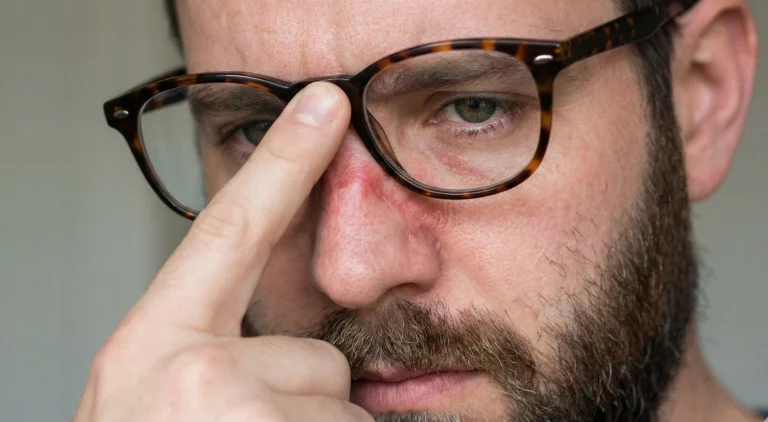
Our Super Flex Frames come with soft silicone nose pads. If your child already has sore spots, read our guide on Why Glasses Leave Marks on Nose to fix the fit immediately.
Step 4: Accept That Durability Beats “Carefulness”
You can teach responsibility but you can’t eliminate childhood.
Design should work with kids, not against them.
Are Flexible Frames Worth It for Kids?
Parents often worry that flexible frames:
- Look cheap
- Feel flimsy
- Won’t last
In reality, it’s the opposite.
Flexible doesn’t mean weak.
It means forgiving.
And forgiveness is exactly what kids’ glasses need.
Common Myths About Durable Kids Glasses
Myth 1: “Stronger Means Thicker”
Not true.
Strength comes from material behavior, not bulk.
Myth 2: “Kids Will Break Anything Anyway”
Also false.
The right material dramatically reduces breakage.
Myth 3: “Flexible Frames Don’t Hold Lenses Well”
Modern TR90 frames are engineered to hold lenses securely even during flexing.
Long-Term Benefits Parents Don’t Expect
Switching to flexible frames often results in:
- Fewer replacements
- Less frustration
- Better wearing habits
- Lower long-term costs
Parents often realize too late that buying cheaper rigid frames repeatedly costs more than one well-designed durable pair.
Choosing the Right Durable Glasses for Your Child
When shopping, look for these signs:
- Frame bends without cracking
- Arms flex outward smoothly
- Lightweight feel
- Comfortable nose support
- Secure but gentle fit
Avoid:
- Brittle plastic
- Sharp hinge resistance
- Heavy front-loaded frames
Why This Matters More Than Ever
Kids today are:
- More active
- More screen-exposed
- Wearing glasses earlier in life
That means frames need to survive years of growth and movement, not just classroom sitting.
Durability isn’t optional anymore it’s essential.
Final Thoughts: Stop Fighting Childhood Design Around It
If your child keeps breaking glasses, it’s not because they’re careless.
It’s because:
- Glasses weren’t designed for kids
- Materials weren’t chosen for movement
- Durability wasn’t prioritized
TR90 flexible frames aren’t a magic trick but they’re one of the smartest, most practical solutions available today for parents tired of replacing broken glasses.
Instead of asking your child to change, choose glasses that understand how kids actually live.
That’s the real fix.
Frequently Asked Questions (FAQS)
Why do kids break glasses so often?
Children are biomechanically more active than adults, subjecting frames to frequent torsional stress through falls, rough handling, and sports. Most standard eyewear is built from rigid materials that cannot distribute this kinetic energy, causing the frames to reach their fracture point at the hinges or bridge when twisted or sat upon.
What is TR90, and why is it good for kids’ glasses?
TR90 (thermoplastic polyamide) is a premium Swiss-engineered memory polymer. Unlike standard plastics, it possesses high flexural fatigue strength, allowing frames to be ultra-lightweight while resisting impacts that would shatter traditional acetate. Its primary benefits for pediatric wear include:
Thermal Resistance: It maintains its shape memory even in high heat.
Low Density: 20% lighter than standard plastics for all-day comfort.
Are flexible frames better for kids?
Yes, flexible frames (specifically TR90 polymers) are superior because they possess a high flexural modulus, allowing them to absorb energy during impact rather than fracturing like standard acetate
Do TR90 frames really last longer than plastic frames?
In comparative durability testing, TR90 frames significantly outlast standard cellulose acetate or injected plastics. Because TR90 is unbreakable under normal deformation, it survives common scenarios like a child pulling glasses off with one hand or accidentally sleeping in them. While no material is truly indestructible, TR90 has a much higher tolerance for repetitive stress.
Can kids still break TR90 glasses?
Yes, no frame is indestructible. However, TR90 significantly reduces the chances of snapping, cracking, or permanent bending compared to rigid materials.
Are TR90 frames comfortable for all-day school wear?
Yes. Because TR90 is lightweight and flexible, kids are less likely to feel pressure on the nose or ears, even during long school days