
Stop Ruining Your Lenses: 5 Steps to Clean Glasses Safely
Most people think scratched or hazy lenses are just part of wearing glasses.
They’re not.
In reality, most lens damage is self-inflicted caused by small, everyday clean glasses that feel harmless but slowly destroy lens coatings over time.
The Safe Cleaning Rules
- Never clean dry: Dry wiping is the #1 cause of scratches.
- Rinse first: Always use water to remove dust before touching the lens.
- No paper products: Tissues and paper towels are made of wood pulp and act like sandpaper.
- Dish soap is best: A drop of lotion-free dish soap is safer than Windex or household cleaners.
- Microfiber only: Use a clean optical cloth, never your t-shirt.
If your glasses:
- Smudge easily
- Look foggy even when clean
- Glare more at night
- Never feel “crisp” anymore
There’s a good chance it’s not the lenses themselves it’s how you’ve been cleaning them.
This guide breaks down the only safe way to clean glasses without scratching, why most common methods fail, and how to protect your lenses long-term without special tools, expensive sprays, or risky shortcuts.
No medical advice.
No myths.
Just real-world eyewear care that actually works.
Table of Contents
Why Proper Glasses Cleaning Matters More Than You Think
Modern lenses are not just pieces of plastic or glass.
They are layered optical systems, often coated with:
- Anti-reflective (AR) coatings
- Anti-scratch layers
- Water-repellent (hydrophobic) coatings
- Oil-resistant (oleophobic) coatings
- Blue-light filtering layers
These coatings improve clarity, reduce glare, and make lenses more comfortable for daily wear but they are thin and delicate.
They don’t fail suddenly.
They fail slowly through friction, abrasion, and chemical exposure.
And most damage happens at that time when you clean glasses, not during wear.
The Real Reason Glasses Get Scratched So Easily
Here’s something most people don’t realize:
Dust is not soft.
Everyday dust contains:
- Sand particles
- Mineral fragments
- Environmental debris
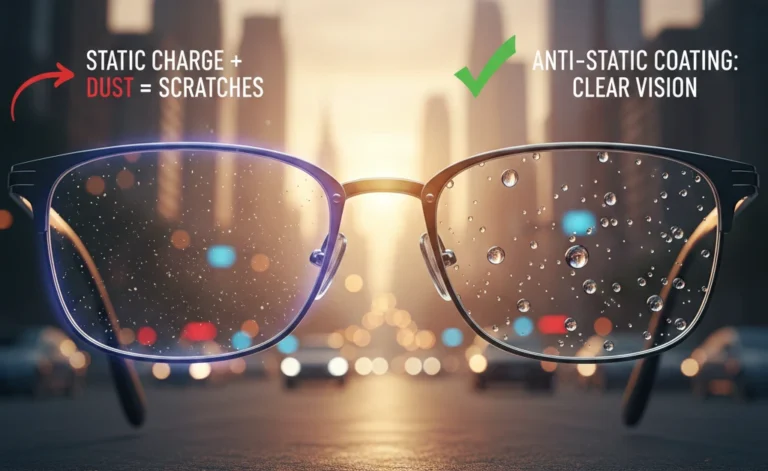
When you clean glasses lenses without rinsing them first, you’re dragging these particles across the surface like microscopic sandpaper.
That’s how:
- Fine scratches form
- Coatings wear unevenly
- Light starts scattering
- Vision feels “hazy” instead of sharp
Once coatings are scratched or stripped, no cleaner can fix them.
The Most Common Mistakes When You Clean Glasses (And Why They’re Harmful)
Let’s clear up the habits that ruin lenses the fastest.
1. Cleaning Glasses with a Shirt or Sleeve
This is the most common mistake and one of the worst.
Clothing fabric contains:
- Embedded dust
- Skin oils
- Laundry detergent residue
- Sweat salts
Even “soft” cotton creates friction and micro-abrasions over time.
2. Using Tissues or Paper Towels
Paper products are made from wood fibers.
They are abrasive by design.
Even one wipe can create micro-scratches that slowly degrade clarity.
3. Dry Wiping
Dry cleaning lenses without water or solution is one of the fastest ways to destroy AR coatings.
No moisture = maximum friction.
4. Household Cleaners
Window cleaner, alcohol sprays, disinfectants, vinegar, and multi-purpose cleaners are not lens-safe.
They can:
- Strip protective coatings
- Leave residue
- Accelerate coating failure
If it’s not made for eyewear, it doesn’t belong on your lenses.
The Only Safe Way to Clean Glasses Without Scratching (Step-by-Step)
This method works for:
- Anti-reflective lenses
- Blue-light lenses
- High-index lenses
- Prescription and non-prescription glasses
No special equipment required.
Step 1: Wash Your Hands First
Your hands carry oils, dirt, and grit.
Cleaning lenses with dirty hands defeats the entire process.
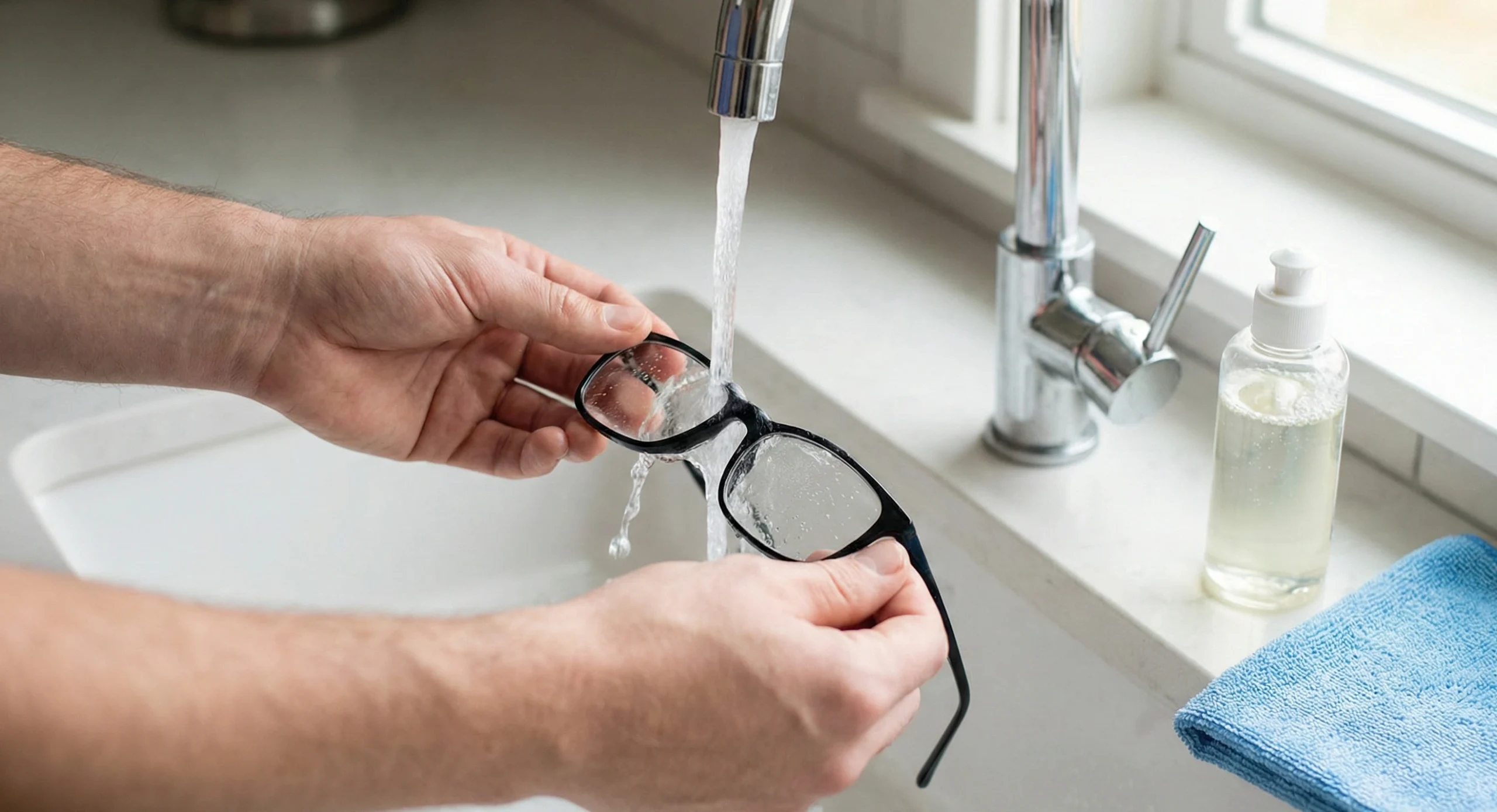
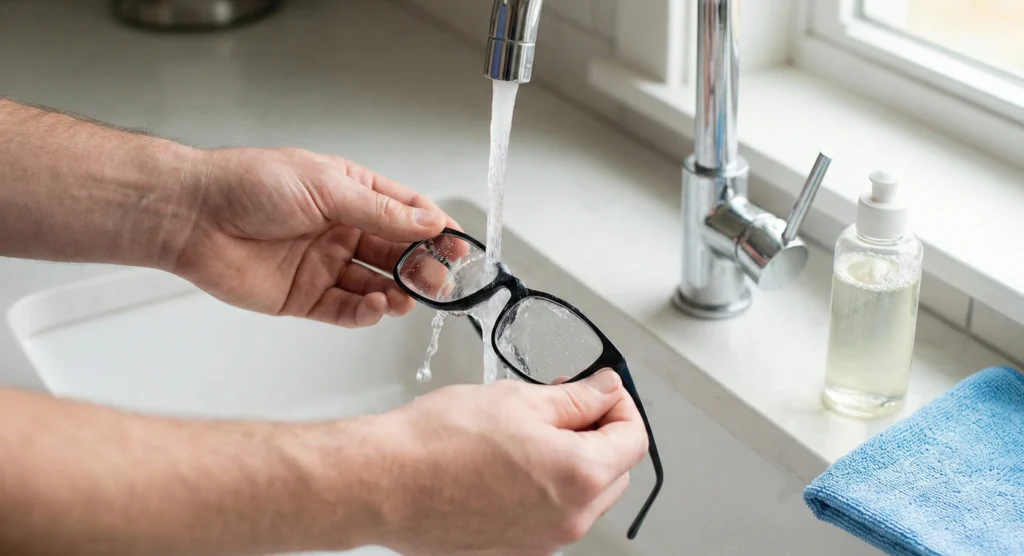
Step 2: Rinse Lenses Under Lukewarm Water
This step is critical.
Running water removes dust and particles when you clean glasses lens surface.
Avoid hot water it can weaken coatings over time.
Step 3: Use a Drop of Mild Dish Soap
Use a simple, lotion-free dish soap.
Why soap works:
- Breaks down skin oils
- Removes residue
- Safe for coatings when diluted with water
Use your fingertips not nails to gently clean both sides of the lenses and frames
This method is especially important if you wear glasses during high-intensity activities where sweat builds up, like when riding a motorcycle or bicycle
Step 4: Rinse Thoroughly
Soap residue causes streaking and smudges.
Rinse until lenses feel clean and slick.
Step 5: Dry with a Clean Microfiber Cloth
Microfiber lifts moisture instead of dragging debris.
Important microfiber rules:
- Keep it clean
- Wash it regularly
- Replace it when it gets stiff or oily
That’s it.
No sprays.
No shortcuts.
No damage.
Are Lens Cleaning Sprays Safe?
Yes but only when used correctly.
Lens sprays should:
- Be labeled specifically for eyewear
- Be used after rinsing, not on dry lenses
- Never replace water as the first step
Sprays alone don’t remove grit water does.
How Often Should You Clean Glasses Lenses?
There’s no single rule, but here’s a realistic guideline:
- Daily wear: Once per day
- Screen-heavy use: Morning and evening
- Sweat, sunscreen, or makeup exposure: Clean immediately
Letting oils sit on lenses degrades coatings faster than gentle cleaning.
Why Glasses Still Look Dirty After Cleaning
If your lenses never feel truly clean anymore, one of these is usually the reason:
- Micro-scratches scattering light
- Worn hydrophobic coating
- Residue buildup from improper cleaners
- Old microfiber cloth spreading oils
At this stage, cleaning won’t fully restore clarity because the surface itself has changed.
That’s why proper cleaning habits matter early, not later.
Cleaning Anti-Reflective and Blue-Light Lenses Safely
These lenses require more care, not special products.
Anti-reflective coatings:
- Reduce glare
- Improve night vision
- Make lenses appear nearly invisible
But they are sensitive to:
- Alcohol
- Dry friction
- Abrasive materials
Blue-light lenses don’t need special cleaning but they still rely on surface coatings for comfort and clarity.
Treat them gently, and they’ll last.
What to Do When You’re Traveling or Outside
If you don’t have cleaning supplies:
Best option
- Rinse lenses with clean water
- Shake off excess water
- Air-dry
Avoid at all costs
- Napkins
- Paper towels
- Shirts
- Dry rubbing
Temporary blur is better than permanent damage.
How to Clean Glasses Without Damaging the Frame
Frames matter too.
Metal frames:
- Dry thoroughly to prevent corrosion
- Avoid bending while cleaning
Plastic frames:
- Soap helps remove oil buildup
- Clean glasses nose pads and bridges gently
Dirty frames transfer oils back onto lenses undoing your cleaning effort.
Also, be careful not to hold the lenses too tightly while wiping, as this can bend the bridge. If your frames are already sitting unevenly, check our guide on how to fix crooked glasses safely.
How to Tell If Your Lenses Are Already Damaged
Signs of coating damage include:
- Rainbow-like reflections
- Cloudy patches
- Glare that wasn’t there before
- Smudges that won’t disappear
Once coatings are damaged, replacement not cleaning is the only fix.
Long-Term Benefits of Proper Lens Cleaning
Proper cleaning:
- Preserves lens clarity
- Reduces glare
- Extends lens lifespan
- Saves money
- Keeps vision comfortable
It’s one of the simplest habits with the biggest payoff.
Final Thought
Most people don’t ruin their glasses on day one.
They ruin them slowly, with habits that feel normal.
If you remember one thing, remember this:
If your lenses are dry, don’t touch them.
Treat your glasses with care, and they’ll stay clear, comfortable, and sharp far longer than most people expect.
Frequently Asked Questions (FAQs)
What is the safest way to clean glasses at home?
The safest method is to rinse your glasses under lukewarm water, clean them gently with a drop of mild dish soap using your fingertips, and dry them with a clean microfiber cloth. This removes dust and oils without damaging lens coatings.
Can I clean my glasses with just water?
Water alone can remove loose dust, but it won’t remove skin oils or residue. For proper cleaning, mild soap is recommended occasionally to prevent smudging and coating buildup.
Is it okay to clean glasses with a shirt or tissue?
No. Shirts, tissues, and paper towels contain fibers and trapped debris that can scratch lenses and wear down coatings over time even if they feel soft.
Are lens cleaning sprays safe to use?
Yes, but only sprays made specifically for eyeglasses. They should be used after rinsing lenses with water, not on dry lenses
How often should I clean my glasses?
If you wear glasses daily, cleaning them once a day is ideal. If exposed to sweat, sunscreen, or heavy screen use, cleaning them more often helps maintain clarity.
Why do my glasses still look dirty after cleaning?
Persistent haze is usually caused by micro-scratches, worn coatings, or residue from improper cleaners. Once coatings are damaged, cleaning alone can’t fully restore clarity.
What should I do if I don’t have a microfiber cloth?
Rinse your glasses with clean water and let them air-dry. It’s better to leave temporary water spots than to risk scratches with improper materials.
Is it safe to clean glasses every day?
Yes. Daily gentle cleaning is safer than infrequent aggressive cleaning and helps prevent oil buildup that damages coatings over time.