
Meta Smart Glasses Add New Privacy Features in 2026: What Changed and Why It Matters
Smart glasses have evolved from futuristic gadgets into practical wearable technology. They can capture photos, record videos, answer questions with AI, translate conversations, and even provide hands-free assistance throughout the day.
However, as smart glasses become more capable, one question continues to dominate conversations: Can people trust them? so Meta Ai glasses add new privacy features to answer these type of questions.
Privacy has remained one of the biggest concerns surrounding wearable cameras since the earliest smart glasses entered the market. Unlike smartphones, which are clearly visible when recording, smart glasses allow users to capture content while maintaining eye contact or simply walking through everyday environments. This unique experience has made privacy an important design challenge for every manufacturer.
Meta has recognized these concerns from the beginning. Instead of only improving cameras and artificial intelligence, the company has continued to strengthen the privacy protections built into its Ray-Ban Meta smart glasses. In 2026, Meta introduced another significant update designed to make recording more transparent and prevent attempts to secretly disable the recording indicator.
Rather than focusing only on new technology, these changes focus on something equally important—building confidence for both the wearer and the people around them.
In this guide, we’ll explain the latest Meta smart glasses privacy features, how they work, why Meta introduced them, and what they mean for the future of wearable technology.
Why Privacy Is the Biggest Challenge for Smart Glasses
Every major technology product faces one defining challenge:
- Smartphones needed better battery life.
- Electric vehicles needed longer driving range.
- Smart glasses need public trust.
The biggest difference between smart glasses and other consumer electronics is that they blend naturally into everyday clothing. Unlike holding a phone or carrying a camera, glasses are something people wear continuously. Because of this, bystanders may wonder whether recording is taking place.
This isn’t simply about technology—it’s about social acceptance.
Manufacturers quickly realized that creating powerful smart glasses wasn’t enough. They also had to create products that people felt comfortable wearing in public while making others feel comfortable around them. That balance between functionality and transparency has shaped nearly every generation of Meta’s smart glasses.
How Meta Has Approached Privacy Since the Beginning
Meta’s philosophy has generally focused on making recording visible rather than hidden. Instead of allowing completely silent recording, Meta introduced several noticeable privacy indicators into its smart glasses. Some of these include:
- A visible LED recording light
- Audible sounds for certain actions
- User-controlled privacy settings
- Voice controls for camera functions
- Permission settings inside the companion app
The goal is simple: If the glasses are recording, nearby people should have visual clues that recording is taking place. This approach differs from hidden wearable cameras that attempt to remain unnoticed.
Meta Ai Glasses Add New Privacy Features and Biggest Feature is here
The most important privacy improvement introduced by Meta in 2026 isn’t a larger camera or more powerful AI. Instead, it’s a protection against people trying to hide the recording indicator.
Previously, some users experimented with covering, damaging, or modifying the small white LED that illuminates whenever the camera records photos or videos. The concern was obvious: If someone could disable that light while keeping the camera operational, nearby people might not realize recording was happening.
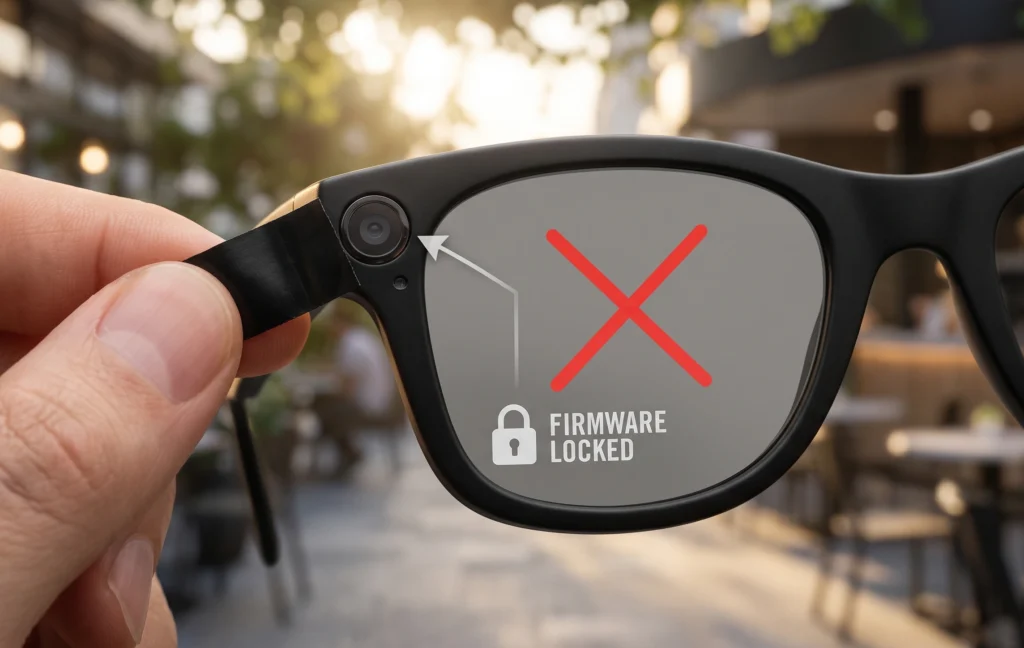
To address this, Meta introduced a firmware-based safety feature.
Camera Automatically Disables if the Privacy LED Is Tampered With
The new system continuously checks the status of the recording indicator. If the glasses detect that the privacy LED has been physically damaged, blocked, or modified in a way that prevents it from working correctly, the camera itself becomes unavailable.
In simple terms: No working privacy light = No camera recording.
This creates a hardware-and-software partnership where both components must function together. Instead of relying solely on user honesty, the glasses actively protect the recording system from unauthorized modification. This represents one of the strongest privacy-focused changes introduced to consumer smart glasses so far.
Why This Update Matters
At first glance, some people might wonder why Meta invested resources into protecting such a small light. The answer lies in public perception.
Privacy concerns rarely come from typical users. Instead, they often arise from the possibility that someone might intentionally misuse technology. By preventing the camera from functioning whenever the recording indicator is compromised, Meta removes one of the biggest fears associated with wearable cameras.
This doesn’t just protect bystanders. It also protects responsible users who want to wear smart glasses without constantly answering questions about hidden recording.
How the Recording Indicator Works
The white LED found near the camera serves an important purpose. Whenever users capture a photo or begin recording video, the indicator lights up clearly.
Unlike tiny notification LEDs found on older electronics, this light was specifically designed to be visible during normal use. The idea is straightforward: Someone nearby doesn’t need technical knowledge about the glasses. They simply need an obvious visual signal indicating when recording is taking place.
Because of the new firmware update, the LED is no longer just a notification light. It has effectively become a required part of the camera system.
Why Meta Didn’t Simply Make the Light Brighter
Some people have suggested that increasing LED brightness would solve privacy concerns. However, brighter isn’t always better. An extremely bright light could become distracting for both the wearer and nearby people.
Instead, Meta focused on reliability. Rather than making the light impossible to ignore, they made it impossible to bypass without disabling recording entirely. This solution addresses the root problem instead of simply increasing visibility.
Privacy Isn’t Only About Cameras
Although cameras receive the most attention, privacy in smart glasses extends much further. Modern wearable devices interact with voice assistants, AI services, photos, videos, microphones, Bluetooth connections, and cloud synchronization.
Because of this, Meta continues expanding privacy controls beyond recording alone. Users can review and manage various settings inside the Meta companion application, including connected services, voice interactions, and stored content. Giving users greater control over their information helps improve confidence in wearable technology over time.
Building Public Trust Is More Important Than Adding Features
The wearable technology industry has reached an interesting point. Consumers are no longer asking: “Can smart glasses do more?” Instead, they’re asking: “Can I comfortably wear them in everyday life?”
Comfort doesn’t only refer to weight or frame design. It also includes social comfort. People want to know they can wear smart glasses in offices, airports, cafés, classrooms, and public transport without creating unnecessary concern.
Strong privacy protections help move the industry toward that goal. Instead of treating privacy as an afterthought, companies increasingly recognize it as a core product feature.
How Meta Compares With Other Smart Glasses on Privacy
Privacy has become one of the biggest factors separating smart glasses in 2026. Camera quality, AI assistants, and battery life are important, but many buyers now evaluate wearable technology based on how responsibly it handles recording and personal information.
Different manufacturers have taken different approaches:
Meta
Meta focuses on making recording visible through a front-facing privacy indicator. The latest firmware also prevents camera use if the recording indicator has been physically tampered with. Combined with user-controlled privacy settings in the Meta AI app, the company aims to make recording more transparent for both users and bystanders.
- Strengths: Visible recording indicator, camera disabled if privacy light is compromised, voice privacy controls, regular firmware updates.
- Considerations: Camera-equipped glasses naturally attract more privacy questions than camera-free models.
Even Realities G2
Even Realities takes a completely different approach. Instead of building a camera into the glasses, the company focuses on a lightweight display for navigation, translation, and notifications. Without a camera, many common recording concerns simply don’t exist.
- Best For: Users who prioritize privacy, business professionals, frequent travelers.
XGIMI Memomind
The Memomind platform focuses on AI-assisted reminders and information rather than content creation. Its privacy model centers more around AI interactions than camera recording. As AI-powered eyewear evolves, privacy discussions will likely shift beyond cameras toward voice processing and cloud services.
Read About Samsung Smart Glasses 2026 Vs Meta Ray-Bans Who Wins In Ai
What Privacy Features Still Matter Beyond Recording
Recording indicators are important, but privacy extends much further than photos and videos. Modern smart glasses may process:
- Voice commands
- AI requests
- Photos & Videos
- Bluetooth connections
- Location information
- Cloud synchronization
Understanding how each feature works helps users make informed decisions. When evaluating any smart glasses, consider questions such as:
- Does the device clearly indicate when recording?
- Can you review stored content?
- Are privacy settings easy to understand?
- Does the manufacturer provide regular security updates?
- Can connected accounts be managed or removed easily?
The answers often matter more than the number of AI features advertised.
Practical Tips for Using Smart Glasses Responsibly
Whether you own Meta smart glasses or another wearable device, responsible use helps create a positive experience for everyone.
- Respect Local Rules: Different countries, workplaces, schools, and businesses may have their own policies regarding wearable cameras. Being aware of local rules demonstrates respect for others and helps avoid misunderstandings.
- Let People Know When Appropriate: In personal conversations or small group settings, simply mentioning that you’re wearing smart glasses can make others feel more comfortable. Transparency builds trust.
- Keep Software Updated: Firmware updates often improve privacy protections, security, performance, battery management, and AI features. Installing official updates ensures your glasses continue benefiting from the latest improvements.
- Review Privacy Settings Regularly: Most companion apps allow users to customize voice interactions, connected accounts, shared services, and stored content. Reviewing these settings every few months is a good habit for any connected device.
Common Myths About Smart Glasses Privacy
Myth 1: Smart Glasses Record Everything
This is one of the biggest misconceptions. Most consumer smart glasses only record when the user intentionally activates the camera. Recording is generally limited by battery life, storage, and user controls.
Myth 2: The Camera Always Runs in the Background
Normal photography and video features are user-controlled. Continuous background recording would significantly reduce battery life and create unnecessary storage demands.
Myth 3: Privacy Updates Mean Previous Versions Were Unsafe
Not necessarily. Technology companies regularly improve privacy protections as products evolve. Adding stronger safeguards doesn’t automatically mean previous devices were insecure—it often reflects new lessons learned through real-world use.
Myth 4: AI Features Automatically Share Everything
Many AI functions require user interaction. Depending on the feature, users can often review settings that control how information is processed or stored. Reading the manufacturer’s privacy documentation helps users understand these options more clearly.
Watch Now: Ray-Ban Meta smart glasses review 2026 | Can I see the future now?
The Future of Privacy in Smart Glasses
The next generation of wearable technology will likely focus as much on trust as innovation. Future improvements may include:
- Smarter recording indicators
- More on-device AI processing
- Expanded user privacy controls
- Better permission management
- Increased transparency about data usage
As AI becomes more capable, manufacturers will continue balancing convenience with responsible design. Companies that succeed in this balance are likely to earn greater consumer confidence.
Frequently Asked Questions
Are smart glasses becoming safer to use?
Manufacturers continue introducing stronger privacy protections, clearer recording indicators, and improved user controls, making modern smart glasses more transparent than earlier generations.
Should I update my Meta smart glasses?
Installing official firmware updates helps ensure you receive the latest features, security improvements, and privacy enhancements.
Do software updates improve privacy?
Yes. Manufacturers frequently release firmware updates that improve security, stability, and privacy protections.
Are camera-free smart glasses more private?
Camera-free models naturally eliminate concerns related to photo and video recording, although users should still review other privacy settings related to AI or voice features.
Why are privacy features important for smart glasses?
Unlike smartphones, smart glasses are worn continuously. Clear privacy protections help build confidence for both users and people around them.
What is the newest privacy feature in Meta smart glasses?
One of the newest updates prevents the camera from functioning if the recording LED has been physically tampered with or disabled, helping ensure recording remains visible to others.
Can the recording indicator be turned off?
The recording indicator is designed as a core privacy feature. Recent updates link camera functionality to the indicator, making it much harder to bypass.
Why does Meta use a recording indicator?
The LED provides a visual signal when photos or videos are being captured, improving transparency for people nearby.
Final Thoughts
Smart glasses have reached an important stage in their evolution. For years, conversations centered around better cameras, longer battery life, and more powerful AI. Today, the focus is shifting toward responsible innovation.
Meta’s latest privacy improvements show that wearable technology is no longer judged only by what it can do, but also by how thoughtfully it protects the people using it—and those nearby.
By linking camera functionality to the recording indicator, Meta has addressed one of the most discussed concerns surrounding camera-equipped smart glasses. While no technology can eliminate every privacy question, this update represents a meaningful step toward greater transparency.
For consumers, the takeaway is simple: privacy features deserve as much attention as hardware specifications. Before choosing any smart glasses, take time to understand how recording indicators, software updates, companion app controls, and manufacturer policies work together.
As competition grows and AI capabilities expand, privacy is likely to become one of the defining factors that shapes the future of smart eyewear. Companies that combine innovation with clear, user-focused safeguards will be best positioned to earn long-term trust.