
How to Stop Glasses from Fogging Up in Winter (2 Methods)
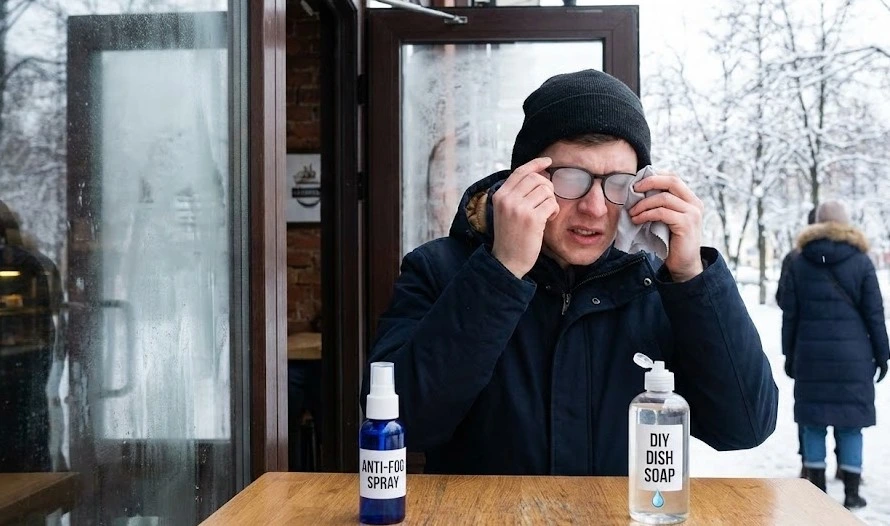
Winter should not feel like a constant battle with your own glasses. Yet for many people, the moment cold air meets warm breath, vision disappears behind a cloudy layer of fog. Stepping outside, entering a heated room, wearing a scarf, or sipping a hot drink can instantly turn clear lenses into an obstacle.
If you’re searching for how to stop glasses from fogging up in winter, you’re already asking the right question. The issue is not low-quality glasses or worn-out lenses. It’s a predictable physical reaction that happens to almost every glasses wearer during cold months.
The good news is that fogging is not unavoidable. With the right approach, you can dramatically reduce or even eliminate it. This guide breaks down what actually causes winter fogging and compares two of the most common solutions: DIY methods (like the dish soap hack) versus professional anti-fog sprays. By the end, you’ll know exactly what works, why it works, and which option fits your lifestyle best.
Why Glasses Fog Up More in Winter
To solve fogging, you need to understand what’s happening on the surface of your lenses.
Fogging occurs when warm, moist air comes into contact with a cold surface. Your breath contains moisture. In winter, your lenses are often cold from outdoor air. When these meet, moisture condenses instantly and spreads across the lens as tiny droplets. These droplets scatter light, which is why everything suddenly looks blurry.
Winter makes this worse because:
- The temperature difference between indoor and outdoor air is larger
- Lenses cool down quickly outside
- Heated indoor spaces create more moisture in the air
- Scarves and masks push warm breath upward
Fogging isn’t a defect. It’s physics. Once you accept that, prevention becomes much easier.
Why Constant Wiping Makes the Problem Worse
Most people react to fog by wiping their lenses over and over again. This feels helpful in the moment, but it often makes fogging return faster.
Here’s why:
- Wiping transfers oil from skin or fabric onto the lens
- Oil attracts moisture
- Moisture forms fog more easily
Over time, lenses develop an invisible film of residue that makes them fog faster and more frequently. This is why some people feel like their glasses fog more than others even in the same conditions.
Prevention always works better than reaction.
Two Main Approaches to Stop Glasses from Fogging
There are only two real strategies for stopping fog:
- Change how moisture behaves on the lens surface
- Change how warm air reaches the lens
Everything else DIY hacks, sprays, wipes falls into one of these categories.
Let’s break them down properly.
Method 1: The Dish Soap Hack (DIY Solution)
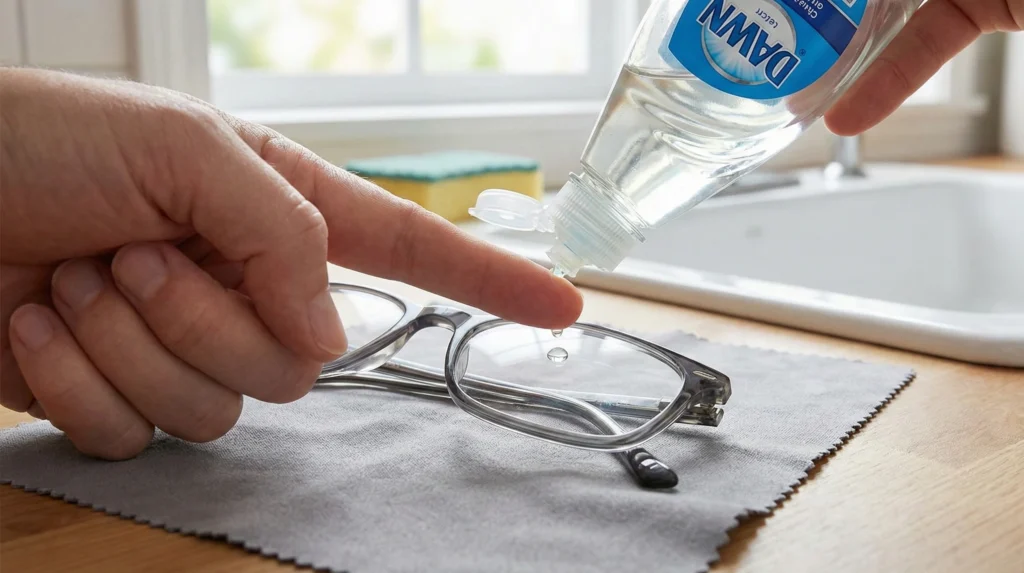
One of the most widely used DIY solutions for foggy glasses involves something almost everyone already has: liquid dish soap.
This method works because dish soap leaves behind a microscopic film that reduces surface tension. When moisture hits the lens, it spreads evenly instead of forming visible droplets.
Why Dish Soap Works
Water droplets cause fog because they clump together. Soap changes how water behaves, encouraging it to form a thin, transparent layer instead of beads. This keeps lenses clearer for a short period.
How to Use the Dish Soap Method Correctly
Doing this incorrectly can leave smears or make lenses worse, so precision matters.
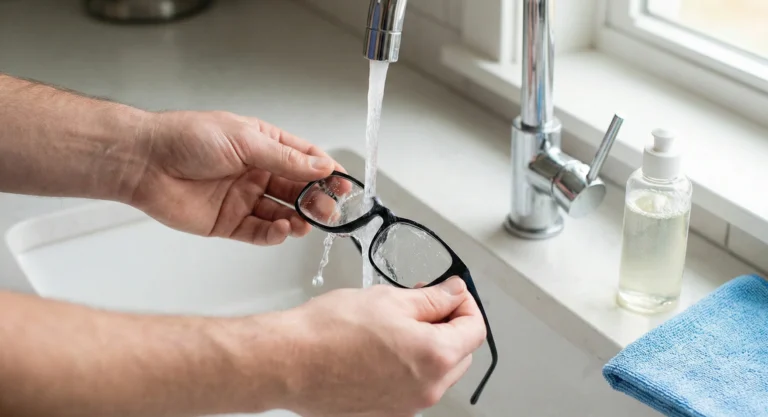
- Wash your hands thoroughly to remove oil
- Apply a very small drop of liquid dish soap to each lens
- Gently spread it across both sides using your fingertip
- Let it sit for about one minute
- Lightly buff the lens with a clean microfiber cloth
Do not rinse the lenses with water.
The invisible soap residue is what prevents fogging.
What Results to Expect
- Fog resistance lasts roughly 2–4 hours
- Works well for short outings
- May leave light smearing if too much soap is used
Pros of the Dish Soap Method
- Free
- Easy to do anywhere
- Works quickly
Cons of the Dish Soap Method
- Temporary
- Can leave streaks
- Repeated use may affect lens coatings over time
This makes dish soap a good emergency solution, but not ideal for daily winter use.
Method 2: Anti-Fog Sprays for Glasses (Professional Solution)
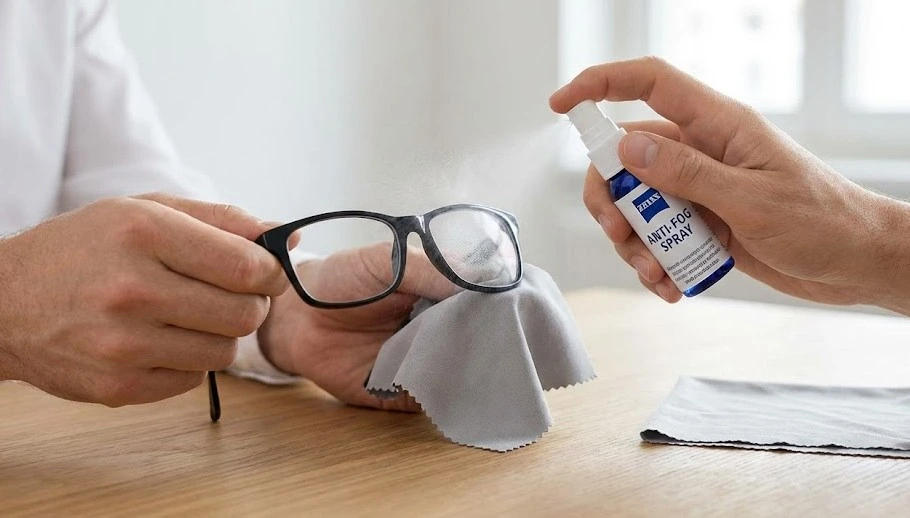
For people who deal with fogging every day commuters, outdoor workers, mask wearers DIY methods often fall short. This is where professional anti-fog sprays come in.
Anti-fog sprays are designed specifically for optical lenses. Instead of reducing surface tension temporarily, they create a hydrophilic layer that causes moisture to spread evenly across the lens as a transparent film.
One well-known example is the Zeiss Anti-Fog Kit, though many reputable brands follow similar principles.
How Anti-Fog Sprays Work
Rather than preventing moisture, sprays control how moisture behaves. When fog would normally form, the water spreads evenly, remaining nearly invisible.
How to Apply Anti-Fog Spray Properly
- Clean lenses thoroughly first
- Apply one or two sprays to each side
- Spread gently with a microfiber cloth
- Allow to dry completely
Most sprays last 24 to 72 hours, depending on conditions.
Pros of Anti-Fog Sprays
- Longer-lasting protection
- Cleaner visual clarity
- Safer for coated lenses
- Less daily maintenance
Cons of Anti-Fog Sprays
- Cost (usually $10–$15)
- Needs reapplication eventually
For frequent fogging, sprays are far more reliable than DIY hacks.
DIY vs. Sprays: Which One Is Better?
The answer depends on how often you experience fogging.
Dish Soap Is Best If:
- Fogging is occasional
- You need a quick fix
- You don’t want to buy anything
Anti-Fog Spray Is Best If:
- Fogging happens daily
- You wear glasses all day
- You use a mask regularly
- Your lenses have coatings you want to protect
Many people start with dish soap and later switch to sprays once winter is in full swing.
| Feature | Dish Soap (DIY) | Anti-Fog Spray (Pro) |
|---|---|---|
| Cost | Free | ~$15 |
| Clarity | Good (May smear) | Crystal Clear |
| Duration | 2–4 Hours | 24–72 Hours |
The Mask and Scarf Problem (And How to Fix It)
Masks and scarves don’t cause fogging directly. They redirect airflow upward straight onto your lenses.
This is an airflow issue, not a lens issue.
Why Masks Make Fog Worse
Warm breath escapes from the top edge of the mask. When it hits cold lenses, fog forms instantly. The better the seal at the top of the mask, the less fog you’ll experience.
Three Practical Ways to Reduce Mask Fogging
1. Improve the Mask Seal
Pinch the nose wire firmly to fit your nose shape. Gaps equal fog.
2. Use the Tissue Method
Fold a tissue horizontally and place it under the top edge of the mask. It absorbs moisture before it reaches your glasses.
3. Improve Glasses Fit
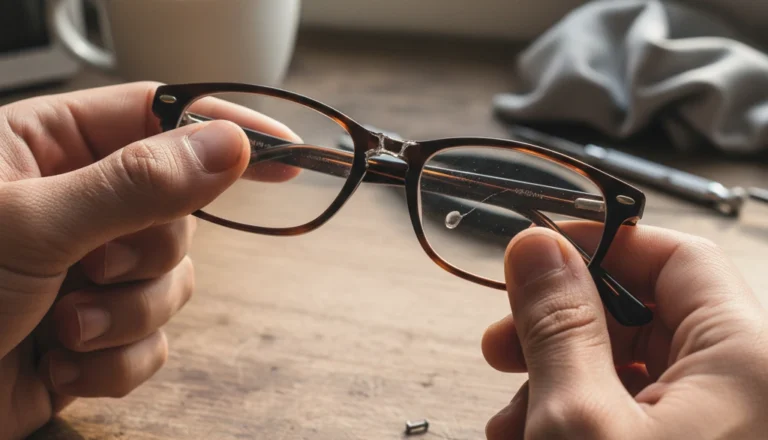
Loose glasses sit lower on the nose, creating a direct path for warm air. A snug fit helps redirect airflow downward.
Small adjustments here often make a bigger difference than sprays alone.
- Read our guide on How to Fix Loose Glasses in 3 Minutes to get a snug fit.
Why Glasses Fit Matters More Than You Think
Many people focus only on lens treatments, ignoring fit entirely.
Poor fit causes:
- Gaps where warm air escapes
- Glasses sliding down the nose
- Uneven airflow toward lenses
Well-fitted glasses sit closer to the face, reducing the amount of warm air reaching the lens surface. Even basic tightening or adjustment can noticeably reduce fogging.
Common Myths About Preventing Fog
Not all advice online is helpful. Some popular “hacks” actually damage lenses.
Toothpaste
Often recommended, but highly abrasive. It can permanently scratch lenses and coatings.
Shaving Cream
Works similarly to soap but leaves heavy residue and can damage coatings over time.
Hot Water
Washing cold lenses with hot water can cause coating damage due to thermal shock.
Avoid these methods entirely.
Why Clean Lenses Fog Less
Clean lenses resist fog better than dirty ones. Oil residue attracts moisture and encourages condensation.
Best Winter Cleaning Habits
- Clean lenses daily
- Use lukewarm water and mild soap
- Dry with a clean microfiber cloth
- Avoid touching lenses with fingers
Clean lenses + anti-fog treatment = best results.
Why Fog Happens When Entering Warm Buildings
Even with perfect preparation, glasses may briefly fog when entering a heated space from the cold.
This happens because:
- Lenses are still cold
- Warm indoor air is humid
This type of fog usually clears within seconds. Anti-fog sprays reduce how severe it becomes.
Long-Term Winter Habits That Reduce Fogging
Fog prevention works best when it’s routine.
Smart Winter Habits
- Store glasses in a case, not pockets
- Keep microfiber cloths clean
- Avoid leaving glasses in cold cars
- Reapply anti-fog regularly
Consistency matters more than any single method.
Do You Need Special Anti-Fog Lenses?
For most people, no.
Special coatings exist, but:
- They wear off over time
- They still require cleaning
- DIY and spray methods often work just as well
Most fogging problems are solved with behavior, fit, and surface treatment not new lenses.
Choosing the Right Solution for You
Here’s a simple way to decide:
- Occasional fogging: Dish soap
- Daily fogging: Anti-fog spray
- Mask wearers: Spray + mask seal
- Expensive lenses: Avoid repeated DIY abrasion
Prevention is always better than reaction.
Final Thoughts
Foggy glasses are one of winter’s most annoying problems but they’re also one of the most fixable. Once you understand that fogging is caused by moisture, temperature, and airflow, the solution becomes clear.
Dish soap works well in a pinch. Anti-fog sprays offer longer-lasting, cleaner results. Combine either with good fit and airflow control, and winter fogging becomes far less frustrating.
Clear vision changes how winter feels.
Stop wiping. Start preventing.
Common Questions About Foggy Glasses
Does putting dish soap on glasses ruin the coating?
generally, no but you must be careful. Most opticians agree that a tiny amount of mild, lotion-free dish soap (like plain Dawn) is safe for occasional use. However, frequent use or scrubbing with harsh soaps containing citrus or abrasives can strip away Anti-Reflective (AR) coatings over time. For expensive prescription lenses, a dedicated anti-fog spray is always the safer choice.
Can I use hand sanitizer or alcohol to stop fogging?
No! Never use hand sanitizer, rubbing alcohol, or household glass cleaners (like Windex) on your glasses. Alcohol is too harsh for modern polycarbonate lenses and will destroy the UV and Anti-Reflective coatings permanently, leading to crazing (tiny cracks) on the lens surface.
Why do my glasses fog up even with anti-fog spray?
If your glasses still fog after using a spray, it is usually due to one of two reasons:
The lenses were dirty: You applied the spray over oil/fingerprints, preventing it from bonding to the plastic.
You wiped it off too hard: After applying the spray, you should gently buff it until clear. If you rub it vigorously, you remove the protective layer entirely.
Is there a permanent anti-fog coating for glasses?
Yes, but you have to buy it when you order your lenses. Brands like Essilor (Optifog) and Hoya offer lenses with permanent anti-fog properties fused into the plastic. However, these coatings still require “activation” drops every week to keep working. For existing glasses, there is no permanent coating you can apply yourself—sprays are the only option.