

The Real Difference Between Basic and Premium Lenses
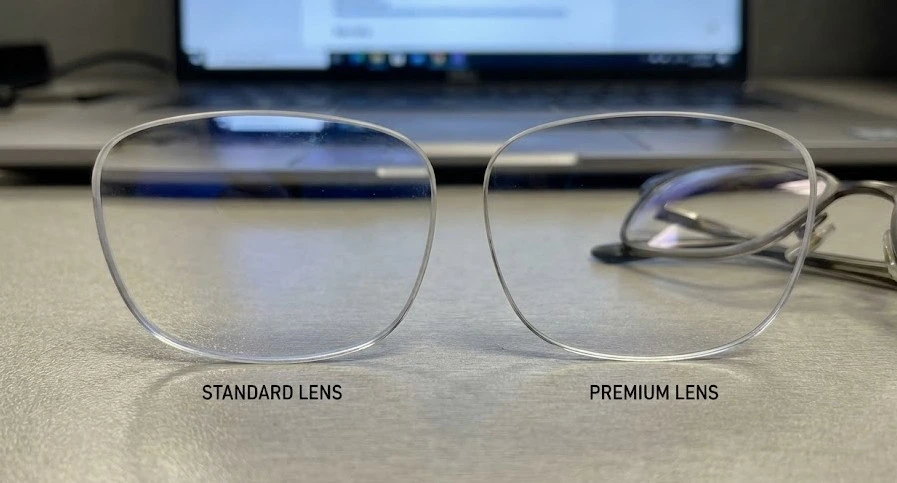
Why Premium Lenses Feel Better
Premium lenses don’t just improve clarity they reduce visual friction.
• They manage glare and reflections more effectively
• High-quality Anti-Reflective (AR) coatings keep vision calm under LEDs and screens
• Premium lenses feel consistent from morning to evening
• The biggest difference shows up after hours of wear, not minutes
• Comfort comes from how light is controlled, not just prescription strength
👉 If your glasses feel fine in the morning but tiring by evening, lens quality is often the reason.
Introduction
At some point, almost everyone who wears glasses notices something strange.
Two pairs can have the same prescription, look nearly identical, and yet feel completely different once you put them on. One pair feels smooth, calm, and easy to look through. The other feels distracting, reflective, or tiring by the end of the day.
That difference isn’t in your head.
Premium lenses don’t just change how clearly you see. They change how vision feels over time. And the reason has very little to do with brand names or marketing buzzwords.
It comes down to how light behaves before it reaches your eyes and how much effort your visual system has to make all day long.
This article explains what actually makes premium lenses feel different in real life. No medical claims. No hype. Just practical design choices that add up to a noticeably better experience.
Why “Feeling” Matters More Than “Seeing”
Most people judge lenses by clarity. Can I read? Can I see road signs? If yes, they assume all lenses are basically the same.
But clarity is only one part of vision.
What you feel during the day visual calm, comfort, stability under different lighting is influenced by dozens of small factors that basic lenses largely ignore.
Premium lenses are designed around a simple idea:
Vision isn’t just about seeing clearly.
It’s about seeing comfortably for long periods of time.
That’s why the real difference often appears after hours of use, not during a quick in-store test.
The Hidden Enemy: Visual Friction
A useful way to understand premium lenses is through visual friction.
Visual friction is the constant, low-level effort your eyes and brain make to deal with:
- glare
- reflections
- harsh brightness
- light bouncing off screens and lenses
- uneven indoor lighting
Basic lenses allow most of this friction to pass through untreated. Your brain compensates automatically but that compensation takes effort.
Premium lenses are engineered to reduce visual friction at the source, so your eyes don’t have to work as hard all day.
That’s the real upgrade.
1. Light Control Is the Real Difference
Every environment you move through creates complex light patterns. Light doesn’t just pass through lenses it reflects, scatters, and bounces.
Basic lenses do very little to control this. Premium lenses are built around it.
They focus on:
- reducing surface reflections
- controlling internal light bounce
- smoothing harsh brightness changes
- managing glare from multiple angles
When light is handled properly, vision feels:
- smoother
- more stable
- less “busy”
You might not notice what’s missing but you notice how much easier it feels.
2. Anti-Reflective Coating: Not All AR Is Equal
Almost every modern lens claims to have Anti-Reflective (AR) coating. That doesn’t mean they perform the same.
Basic AR coatings:
- reduce some reflections
- often appear shiny under lights
- wear out faster
- still allow noticeable glare
Premium AR coatings:
- use multiple optimized layers
- reduce reflections evenly
- improve contrast, not just brightness
- make lenses look nearly invisible on camera
This is why premium lenses perform better during:
- video calls
- indoor LED lighting
- photography
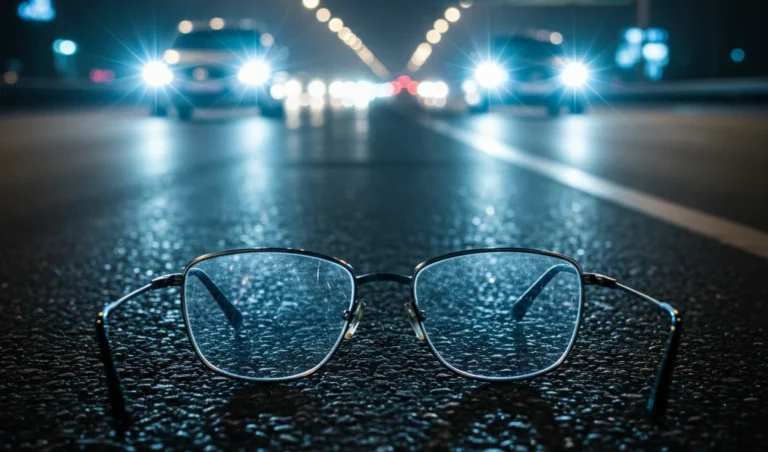
- night driving
If you want a deeper breakdown of how AR works and why it matters so much for glare and reflections, read our full guide:
Anti-Reflective vs. Blue Light Blocking: What’s the Difference?
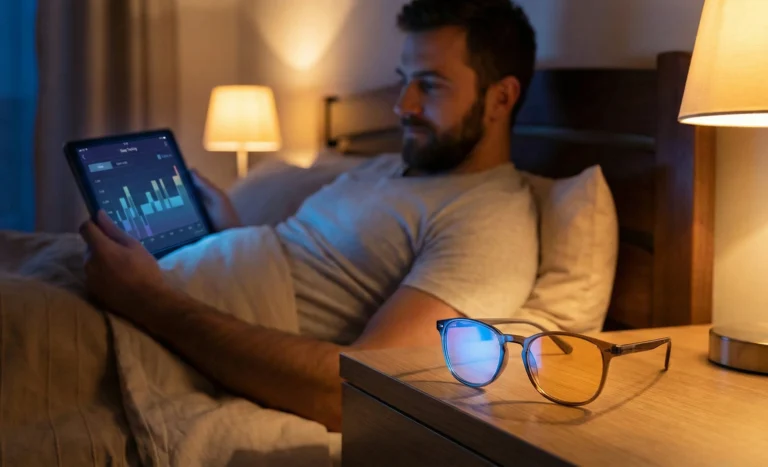
3. Why Premium Lenses Feel Better on Screens
Screens are one of the biggest stress tests for lenses.
Basic lenses tend to:
- reflect screen light back at you
- make white backgrounds feel harsh
- amplify glare under LEDs
Premium lenses manage screen light more gracefully.
This doesn’t mean heavy tinting. The best premium lenses barely change color at all. Instead, they reduce harshness by controlling how high-energy light interacts with the lens surface.
The result:
- steadier text
- calmer backgrounds
- less visual fatigue during long sessions
You may not notice it in the first five minutes but you absolutely notice it after five hours.
4. Blue Light Filtering: Subtle vs Aggressive
One of the most misunderstood features in lenses is blue light filtering.
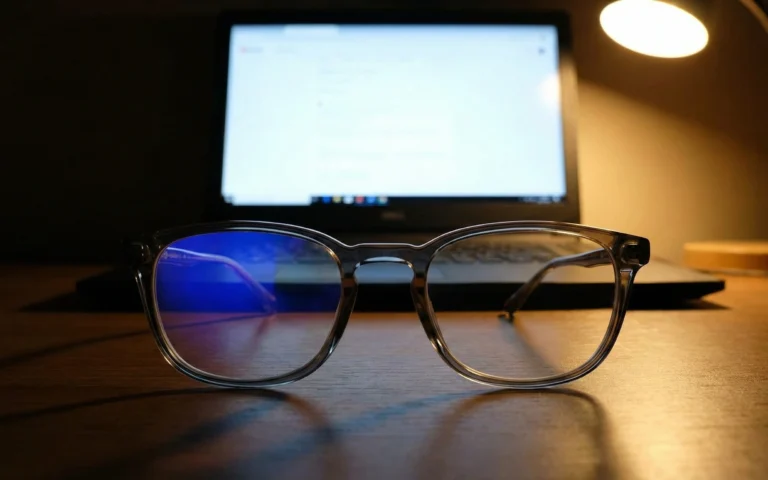
Cheap blue light lenses often block blue light by reflecting it off the surface, which creates shiny blue or purple reflections.
Premium lenses take a subtler approach:
- internal filtering instead of surface reflection
- designed to work with AR coating
- minimal impact on color accuracy
Aggressive filtering can actually make lenses feel worse by increasing reflections. Premium lenses aim for balance reducing harshness without creating new distractions.
✨ Confused by Lens Coatings?
Don’t pay for coatings you don’t need. Use our interactive guide to find the perfect performance suite based on your daily screen time and environment.
Try the Lens Selection Tool →5. Clarity Isn’t Everything Contrast Is
Sharpness is easy to market. Contrast is harder to explain.
Basic lenses can be very sharp but still feel tiring because contrast constantly shifts as lighting changes.
Premium lenses are designed to:
- maintain consistent contrast
- reduce micro-fluctuations in brightness
- prevent visual “washout”
This consistency is what makes premium lenses feel calmer, even when clarity looks similar on paper.
6. Coatings Designed as a System
In basic lenses, coatings are often added individually.
In premium lenses, coatings are engineered as a system.
This system typically includes:
- Anti-Reflective layers
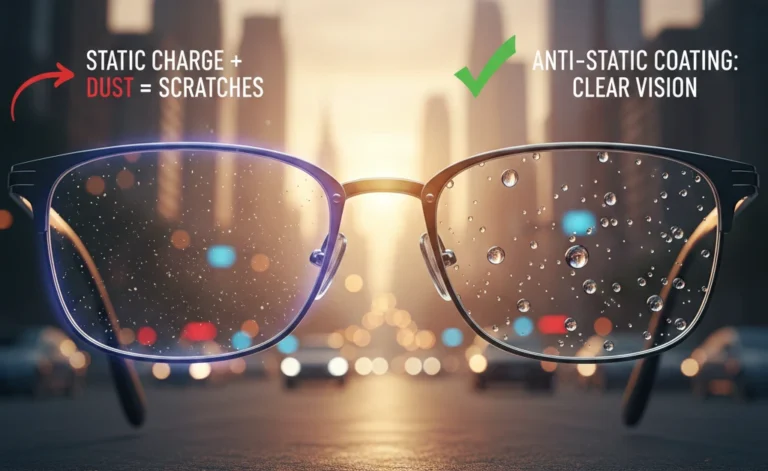
- scratch resistance
- hydrophobic (water-repelling) layers
- oleophobic (oil-resistant) layers
- optional blue light management
When coatings work together, lenses feel predictable and stable. When they don’t, lenses can feel clean in one situation and distracting in another.
7. Surface Quality and Visual Noise
Premium lenses usually have:
- smoother surface finishing
- more consistent coating application
- fewer microscopic irregularities
These tiny differences affect how light scatters across the lens. Less scatter means less visual noise and less effort from your eyes.
8. Durability Changes the Experience Over Time
Another reason people swear by premium lenses is how they age.
Basic lenses often:
- develop micro-scratches faster
- lose coating effectiveness
- become harder to clean
- reflect more light over time
Premium lenses tend to:
- stay clearer longer
- clean more easily
- maintain performance months later
That consistency keeps visual friction low throughout the life of the lens.
9. Why the Difference Shows Up in the Evening
Morning is deceptive. Almost any lens feels fine early in the day.
Evening is where the difference becomes obvious.
Basic lenses often feel:
- harsher
- more reflective
- visually demanding
Premium lenses tend to feel:
- consistent
- calmer
- easier to use for long periods
Not because they do something magical but because they reduce constant micro-adjustments all day long.
10. Lens Comfort Depends on Frame Balance Too
Even the best lenses can feel off in the wrong frame.
Premium lenses are often designed with frame interaction in mind:
- weight distribution
- thickness placement
- edge finishing
If you wear glasses all day, frame balance matters just as much as lens quality. We explain this in detail in our guide:
How to Choose Frames If You Wear Them All Day: 5 Rules for Comfort
Who Notices the Difference Most
Premium lenses make the biggest impact for people who:
- wear glasses all day
- work on screens
- sit under LED lighting
- attend video calls
- drive at night
For occasional wearers, the difference may feel subtle. For daily users, it’s often immediate — and hard to give up.
What Premium Lenses Are Not
Premium lenses are not:
- magically sharper
- a cure-all
- a replacement for good frame fit
- something everyone needs
They’re an upgrade in experience, not just optics.
Final Thought
Premium lenses don’t feel different because they’re expensive. They feel different because they’re engineered around how people actually live under screens, LEDs, reflections, and long hours of use.
They reduce visual friction instead of asking your eyes to work harder.
Want to feel the difference instead of just reading about it?
At GlaSight, our premium lenses are engineered to reduce visual friction by combining advanced Anti-Reflective layers with balanced light management for screens, indoor lighting, and long daily wear.
If you wear glasses all day, this is the upgrade designed for real life not marketing claims.
This article is based on real-world usage patterns, lens design principles, and long-term wear considerations not medical advice or marketing specifications.
Frequently Asked Questions (FAQs)
What’s the biggest difference between premium and basic lenses?
The biggest difference is how light is managed, not how sharp things look. Premium lenses reduce glare, reflections, and visual noise, which makes them feel calmer and more comfortable over long periods.
Why do premium lenses feel better after several hours?
Because they reduce visual friction throughout the day. Your eyes make fewer constant adjustments to glare, reflections, and harsh lighting, so vision feels more consistent from morning to evening.
Do premium lenses make vision sharper?
Not necessarily. Most lenses already provide clear vision. Premium lenses improve comfort, contrast stability, and light control, which affects how vision feels, not just how it looks.
Is Anti-Reflective (AR) coating the main reason premium lenses feel different?
AR coating is a major factor, but quality matters. Premium AR coatings use multiple optimized layers that reduce reflections evenly, especially under LED lighting, screens, and night driving conditions.
Are all lenses with AR coating considered premium?
No. Many basic lenses include AR coating, but premium lenses use higher-quality, longer-lasting AR systems that perform better across different lighting environments.
Why do some lenses look clear but still feel tiring?
Clear vision doesn’t always equal comfortable vision. Poor light control, glare, and uneven contrast can still make lenses feel demanding over time, even if everything looks sharp.



3 Comments